Canon AE-1 vs Olympus mju II: which should you buy?
A manual-focus SLR or an autofocus pocket compact? Compare the AE-1 and fixed-lens mju II through control, carrying, ownership cost and real photos.
Our verdict: Choose the AE-1 if you want to learn manual focus and control exposure, or choose the mju II if you want autofocus and automatic exposure in a pocketable camera.
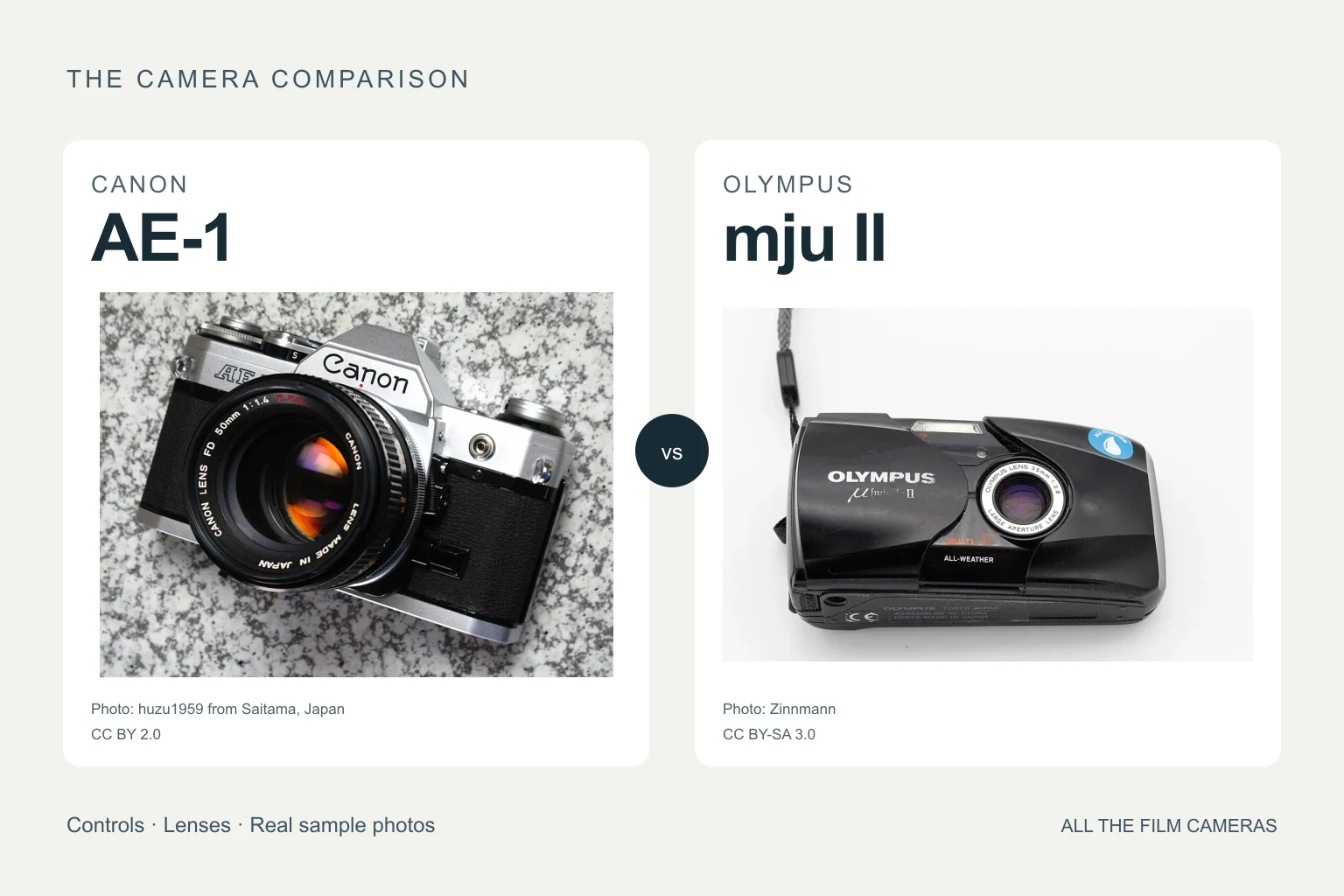
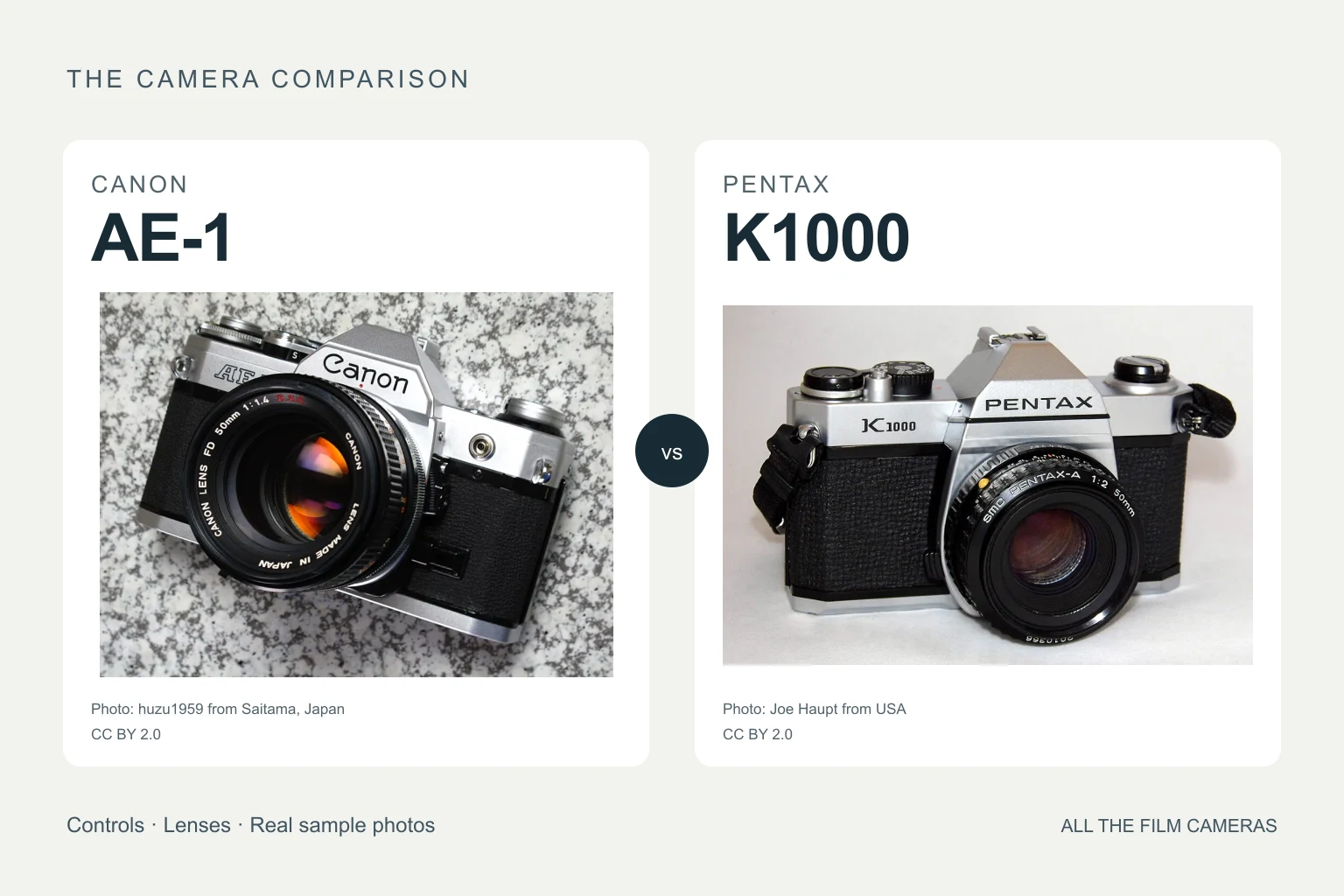
Canon AE-1
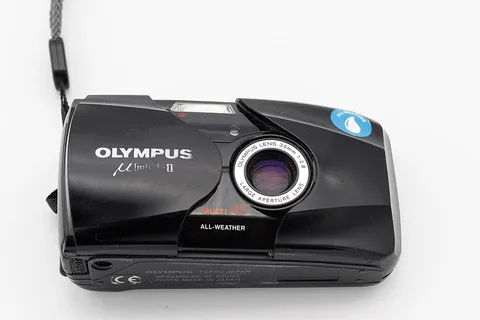
Olympus mju II
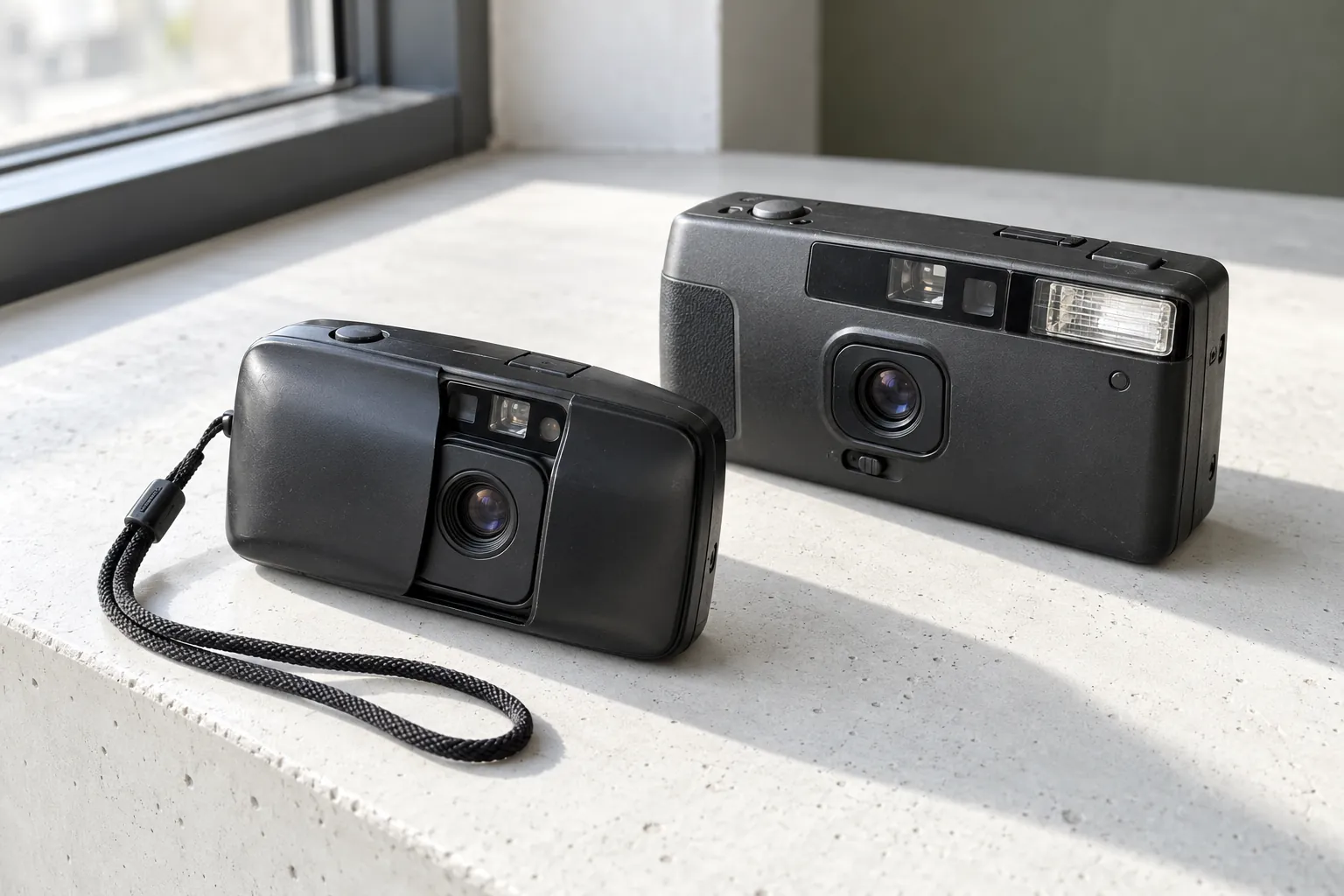
These cameras share 35mm film, but buying them leads to different routines. The AE-1 invites you to focus a lens and choose exposure controls. The mju II is for carrying a small camera and letting it handle those decisions. This is a useful comparison when you are choosing how involved you want your first film camera to be.
Focus and framing: through the lens or an optical window
The AE-1 is an SLR. You see through the taking lens and turn its focus ring yourself. That makes focusing part of every picture and lets you see the view change when you fit another lens.
The mju II has autofocus and a separate optical viewfinder. Use the focus area and half-press routine carefully, particularly when your subject is away from the centre. It reduces the controls you need to work, but you still need to tell the camera what to focus on. Read the Canon specifications and Olympus specifications for the different designs.
Exposure control: choosing a speed versus trusting Program
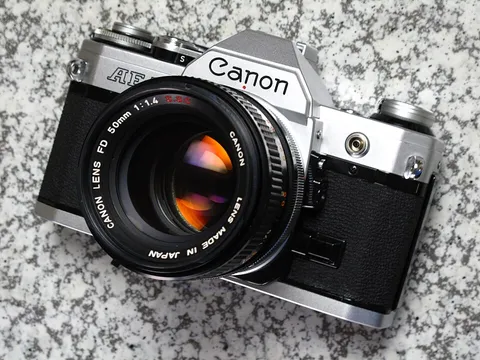
The AE-1 has shutter priority and manual exposure. In its automatic mode, choose a speed and let the camera select an aperture with a compatible FD lens. You can also set both yourself, which makes it useful for learning how exposure choices affect the result.
The mju II uses programmed automatic exposure. You do not get separate manual shutter-speed and aperture controls. Its built-in flash adds convenience, while the Canon needs an external flash if you want one. If manual exposure is a requirement for your course, choose the Canon between these two.
Lenses and carrying: a system versus a fixed 35mm view
The AE-1 accepts FD lenses. You can begin with a standard lens and later choose a wider or longer view. Carrying several lenses adds weight, expense and decisions, so buy the next one only when you know what you need it for.
The fixed-lens mju II has a 35mm f/2.8 lens built in. Its compact shape is the stronger reason to choose it for a pocket or small bag. Confirm that the listing is the fixed-lens model. A mju II Zoom has a different lens and is not the camera compared here.
Ownership: check the whole mechanism
Both need batteries. The Canon’s shutter is electronic despite its manual controls. The Olympus also needs power for autofocus, flash and film transport. Neither is the right choice if battery-independent shutter operation is essential.
The Canon’s lens can be replaced separately. A fault in the Olympus’s fixed lens or transport calls for assessing repair of the complete compact. Compare tested examples, evidence from a developed roll and return policies. Current asking prices can vary enough that one untested bargain can absorb the money you intended to spend on film and processing.
Sample photos
Compare subjects and framing before deciding which routine suits you. Films, lenses and processing differ across the galleries. A particular colour treatment is not a built-in look from either body, and the photos are not a matched laboratory test.
Canon AE-1
16 real sample photos
Digitised slide from 1980
Digitised slide from 1980
Olympus mju II
6 real sample photos
See all sample photos from both cameras
Canon AE-1
Olympus mju II
Which should you buy?
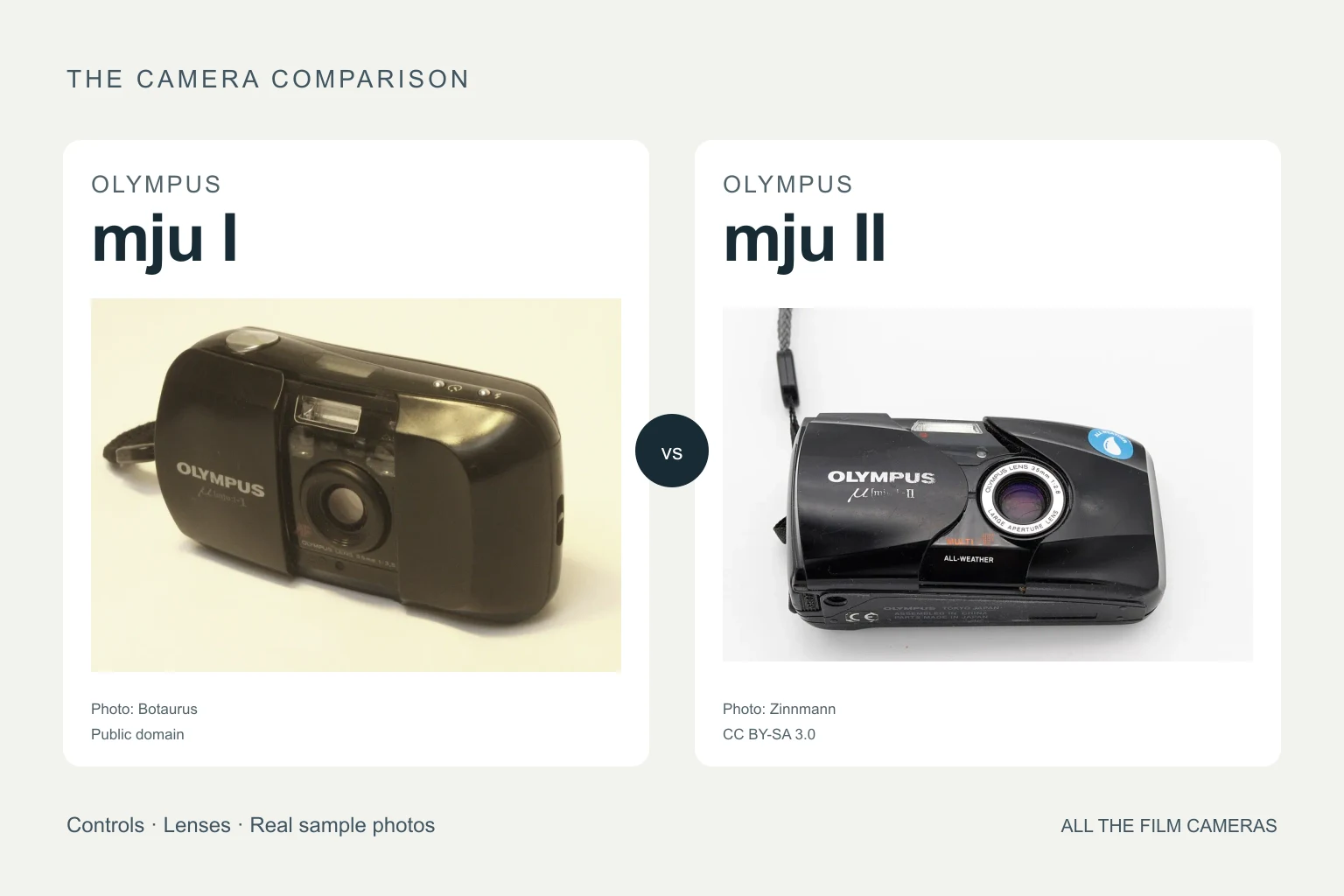
We would choose the mju II for someone who wants a small camera for everyday moments with fewer settings. We would choose the AE-1 for learning exposure and exploring different lenses. If you like the compact approach, compare the mju I and II before paying for the later model.
Buy the Canon AE-1 if
- You want manual focus and direct control over exposure.
- You want to change lenses as your interests develop.
- You need an SLR for a class teaching manual settings.
Find Canon AE-1
We may earn a commission at no extra cost to you when you buy through links on this page. As an Amazon Associate I earn from qualifying purchases.
Buy the Olympus mju II if
- You want autofocus and automatic exposure in a small body.
- A fixed 35mm view suits your everyday pictures.
- You found a tested fixed-lens example with clear return terms.
Find Olympus mju II
We may earn a commission at no extra cost to you when you buy through links on this page. As an Amazon Associate I earn from qualifying purchases.
Common questions
Is the Canon AE-1 better than the Olympus mju II?
The AE-1 gives you more direct exposure control and interchangeable lenses. The fixed-lens mju II gives you autofocus and more compact carrying. Choose by how you want to take pictures. Neither body guarantees a better film photograph.
Which is better for a beginner?
The mju II is easier if you want the camera to handle focus, exposure and winding. The AE-1 is better suited to learning manual focus and choosing shutter speed or full manual exposure.
Can the Olympus mju II change lenses?
No. This comparison covers the fixed 35mm f/2.8 model. The AE-1 accepts interchangeable Canon FD lenses. The mju II Zoom is a different camera.
Explore these cameras
Canon AE-1