Olympus OM-1 vs OM-10: which should you buy?
Mechanical manual control or aperture-priority convenience? Compare Olympus OM-1 and OM-10 batteries, the Manual Adapter, shared lenses and real photos.
Our verdict: Choose the OM-1 for manual exposure and a mechanical shutter, or choose the OM-10 for aperture-priority convenience, checking for its optional Manual Adapter if you also want manual speeds.
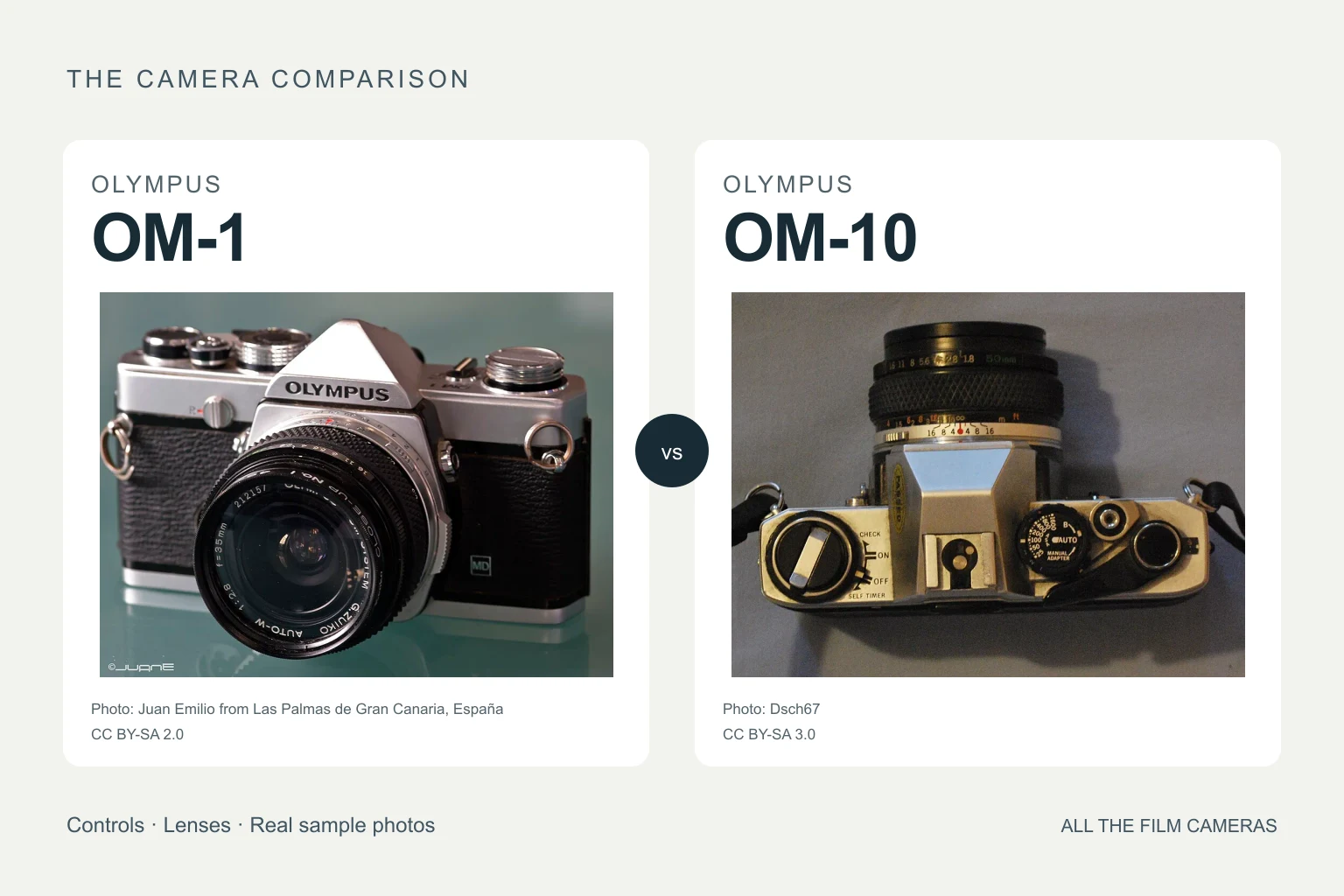
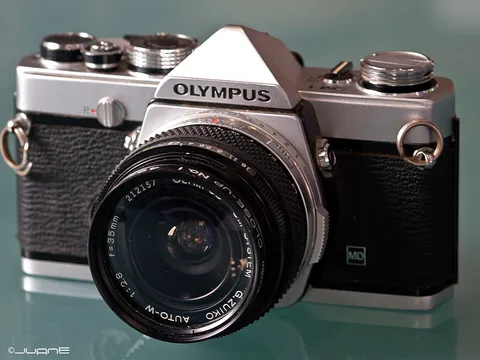
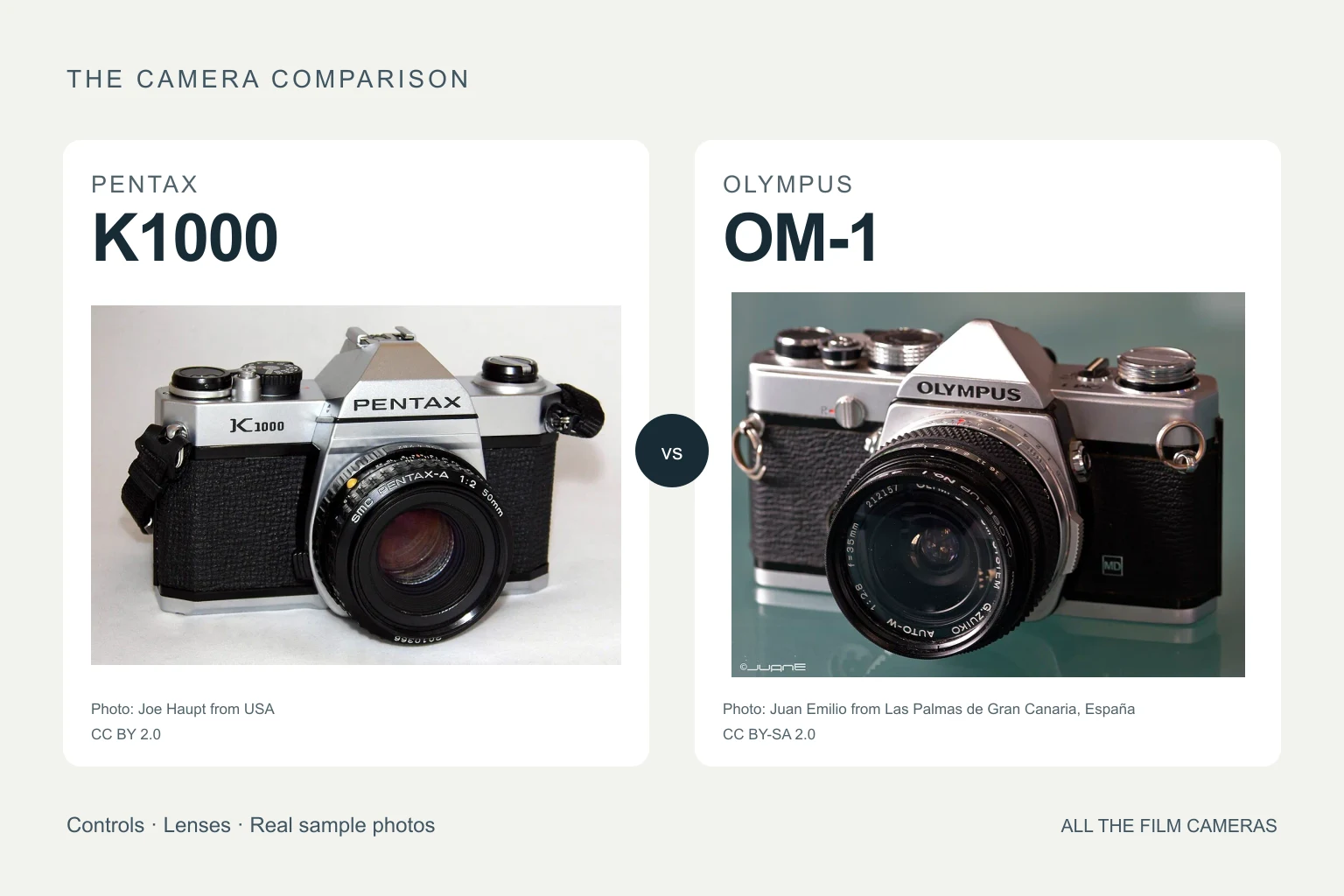
Olympus OM-1
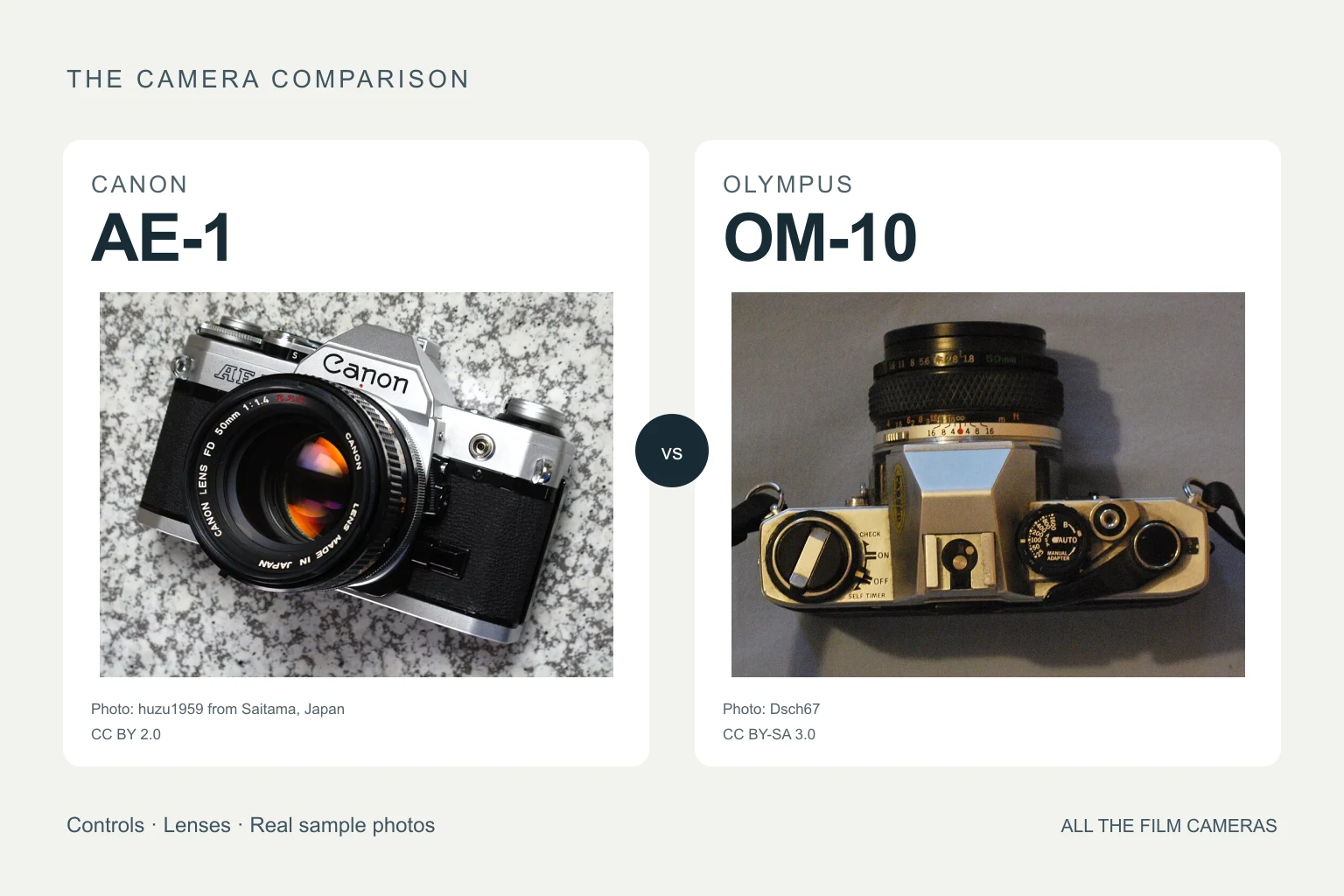
Olympus OM-10
The OM-1 and OM-10 share a lens system but put exposure in different hands. The OM-1 gives you a meter reading and leaves the settings to you. The OM-10 can keep adjusting shutter speed while you concentrate on focus and composition.
Exposure: manual settings versus aperture priority
The OM-1 requires you to choose both shutter speed and aperture. The OM-10’s standard shooting mode is aperture priority: choose the aperture, and the camera selects a shutter speed for the measured light.
For a walk through sun and shade, that automatic adjustment can make the OM-10 more convenient. For an exercise where you want to understand every exposure, the OM-1 keeps both controls in your routine. The original OM-1 and OM-10 manuals are the references for those controls.
Shutter power: mechanical versus electronic
The OM-1 shutter operates without a battery. Its meter still needs power. The OM-10 depends on batteries for normal shutter operation as well as metering, so carry a spare pair of the specified cells.
Check how an OM-1’s meter has been adapted to a replacement for its original mercury cell. Ask the seller whether the meter has been checked using the supplied battery arrangement. If you plan to meter separately, a non-working internal meter may be acceptable at the right kit cost, provided the fault is understood.
Manual control: check for the OM-10 adapter
The OM-1 has its manual shutter-speed ring around the lens mount. The OM-10 needs the optional Manual Adapter for selectable manual shutter speeds. This is a separate accessory that should be visible in the listing and included in the price if the seller promises that function.
An OM-10 advertised as a manual camera may simply mean manual focus. Ask specifically about manual exposure and the adapter. Installing it does not change the electronic shutter into a mechanical one. If you know you will always work manually, compare the complete adapted kit against the OM-1.
Lenses and focusing: the same system can keep costs down
Both accept appropriate manual-focus OM lenses. If you already own a suitable Zuiko standard lens, that removes much of the kit-cost difference. Olympus digital lenses are different systems and should not be substituted by brand name alone.
Both show the view through the lens and require manual focusing. Try the exposure display and focusing screen with the lens you intend to use. Check for finder haze and optical problems in the lens. A body upgrade will not remove fungus from a lens you keep using.
Sample photos
The catalog currently has different numbers of photographs for these models. Each available photograph is accessible here, with its source. Film and processing differ between pictures, so a larger gallery or a more appealing colour treatment should not be read as a body-quality score.
Olympus OM-1
2 real sample photos
Olympus OM-10
19 real sample photos
See all sample photos from both cameras
Olympus OM-1
All 2 photos are shown above.
Olympus OM-10
Which should you buy?
We would choose the OM-10 for someone who wants exposure help on everyday walks. We would choose the OM-1 for a deliberate manual routine, after checking its meter power. Compare the body, lens and any required adapter as one purchase. Our used-camera guide covers the seller checks.
Buy the Olympus OM-1 if
- You want manual exposure without buying an accessory.
- You want the shutter to work without batteries.
- You like the shutter ring around the mount and have checked the meter arrangement.
Find Olympus OM-1
We may earn a commission at no extra cost to you when you buy through links on this page. As an Amazon Associate I earn from qualifying purchases.
Buy the Olympus OM-10 if
- You prefer aperture-priority exposure for changing light.
- You are happy to carry spare cells.
- You have priced the Manual Adapter only if you need its controls.
Find Olympus OM-10
We may earn a commission at no extra cost to you when you buy through links on this page. As an Amazon Associate I earn from qualifying purchases.
Common questions
Is the Olympus OM-1 better than the OM-10?
The OM-1 is the better fit for manual exposure with a battery-independent shutter. The OM-10 is more convenient when you want aperture-priority exposure. They use the same manual-focus OM lens system, so handling and condition matter more than a blanket quality ranking.
Which Olympus is better for beginners?
The OM-10 is our choice for a beginner who wants exposure assistance. The OM-1 fits a course or personal project built around learning manual exposure. Both require manual focus.
Does the OM-10 Manual Adapter make it mechanical?
No. It adds selectable manual shutter speeds, but the shutter remains electronic and requires batteries. The OM-1's shutter is mechanical without needing an adapter.
Explore these cameras
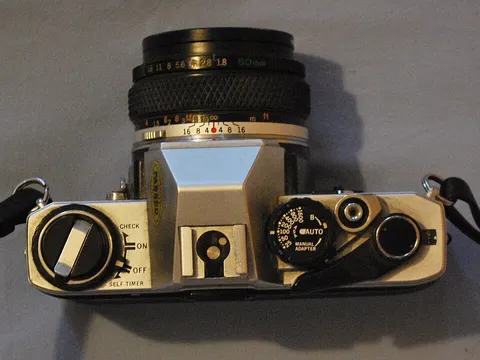
Olympus OM-10