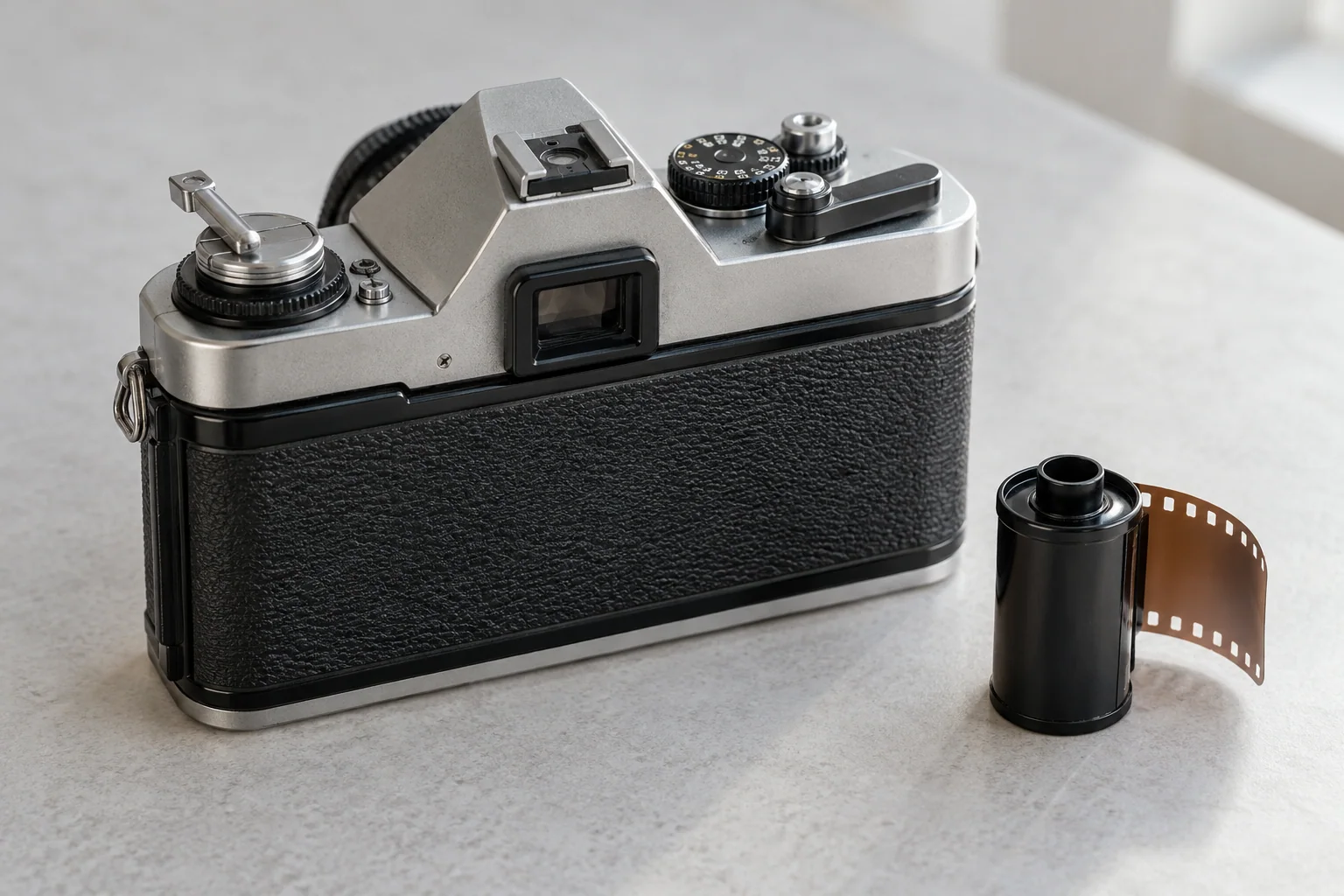
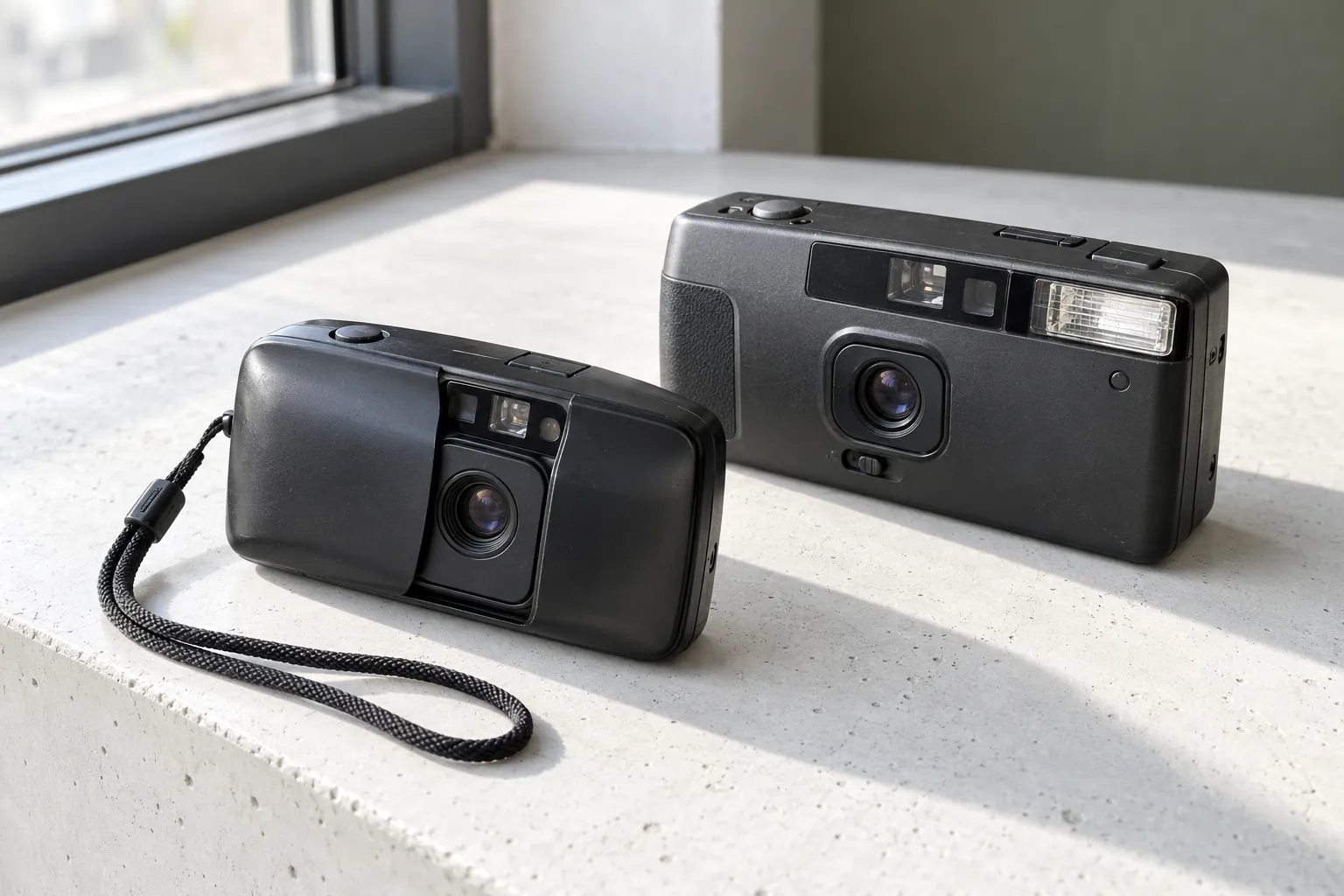
Reusable vs disposable film cameras: what should you choose?
Compare a single-use camera with a simple reusable 35mm camera, including loading, flash and what happens when the roll is finished.
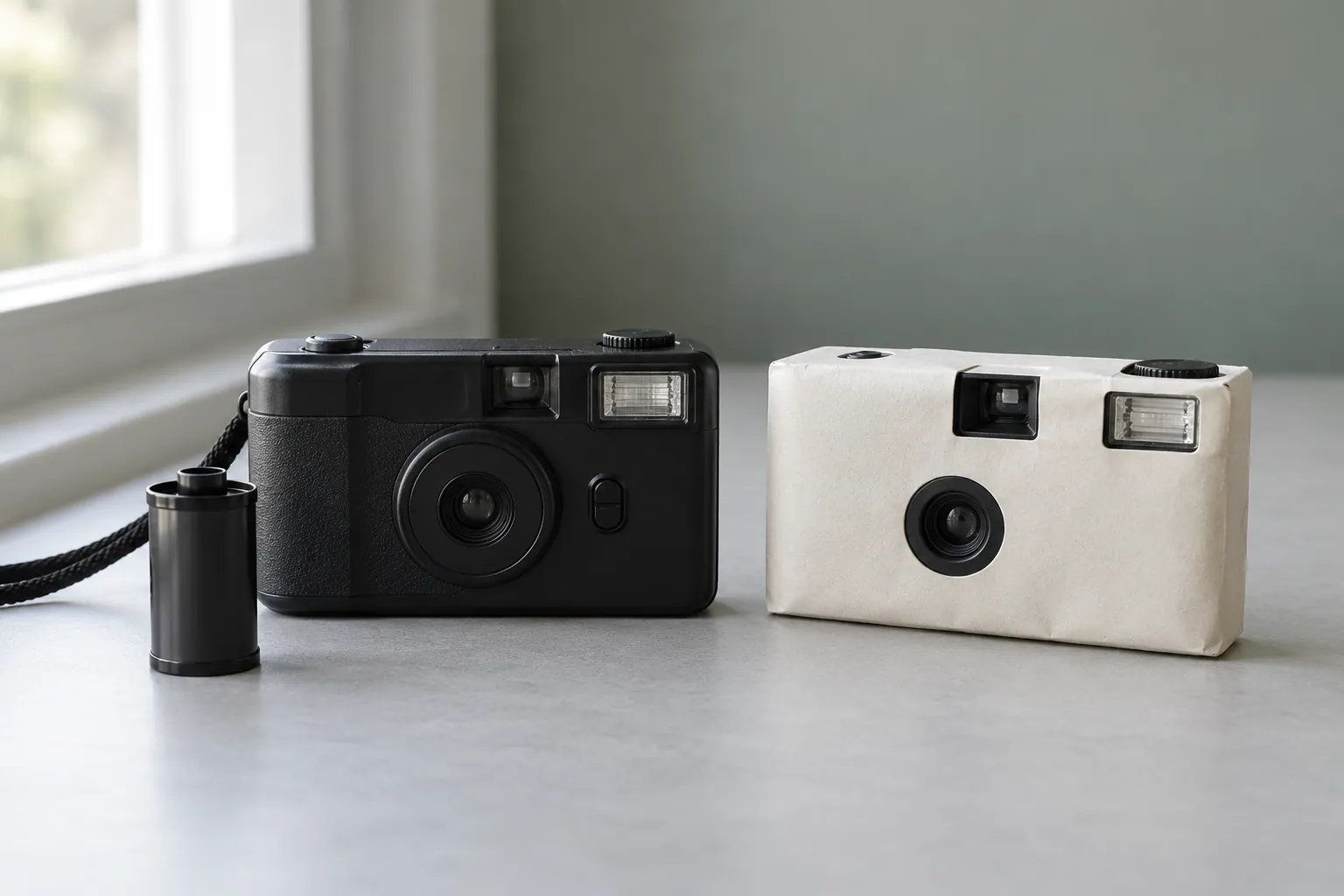
A single-use camera arrives with its film loaded. A reusable camera lets you load another roll when you finish. That is the main practical difference, but the lens, focusing and exposure controls also determine how each camera behaves.
When a disposable camera is convenient
A single-use camera is a straightforward option for one event or for someone who doesn’t want to load film. Follow its instructions for working distance and flash, then give the whole camera to a lab that accepts that model.
It still needs development. Even black-and-white film can need a different process: ILFORD describes XP2 as a colour-process black-and-white film. Read the label and confirm the process with your lab.
What a simple reusable camera gives you
You can choose a film stock and keep using the body. That makes a reusable camera worth considering if you expect to shoot more than one roll and are willing to learn loading and rewinding.
Entry-level models can be very simple. The ILFORD Sprite 35-II, for example, has fixed focus and a fixed shutter speed. Reusable does not automatically mean autofocus, a zoom lens or adjustable exposure.
Find ILFORD Sprite 35-II
Purchases through these links may earn us a commission. As an Amazon Associate I earn from qualifying purchases.
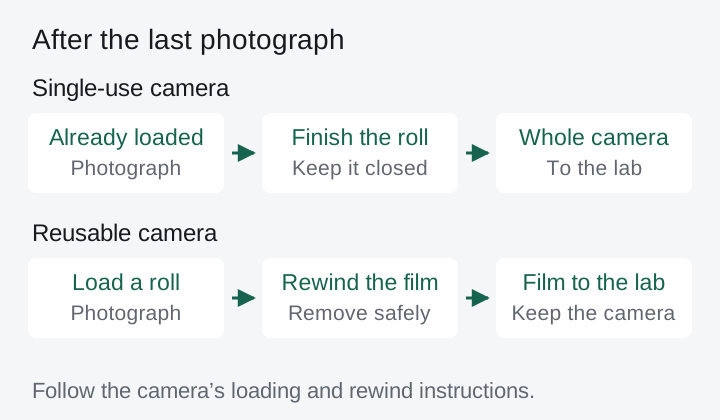
Both need enough light
With a basic fixed-exposure camera, bright daylight is the easiest place to begin. Indoors, use the flash as directed and keep your subject within its stated range. A small flash won’t light an entire room.
Read the close-focusing limit too. Moving nearer than the lens can focus often explains a soft portrait even when the camera has a flash.
When an autofocus compact is a better fit
If you want the camera to focus and adjust exposure for you, explore an autofocus point-and-shoot. Those features are a separate choice from whether a camera is reusable.
For a simple reusable model, read how to load 35mm film before the first roll. Whichever type you choose, ask the lab to return your negatives along with the scans.