How to load and rewind your first 35mm film
Get the film onto the take-up spool, check that it advances, and rewind it safely before opening a manual-wind camera.
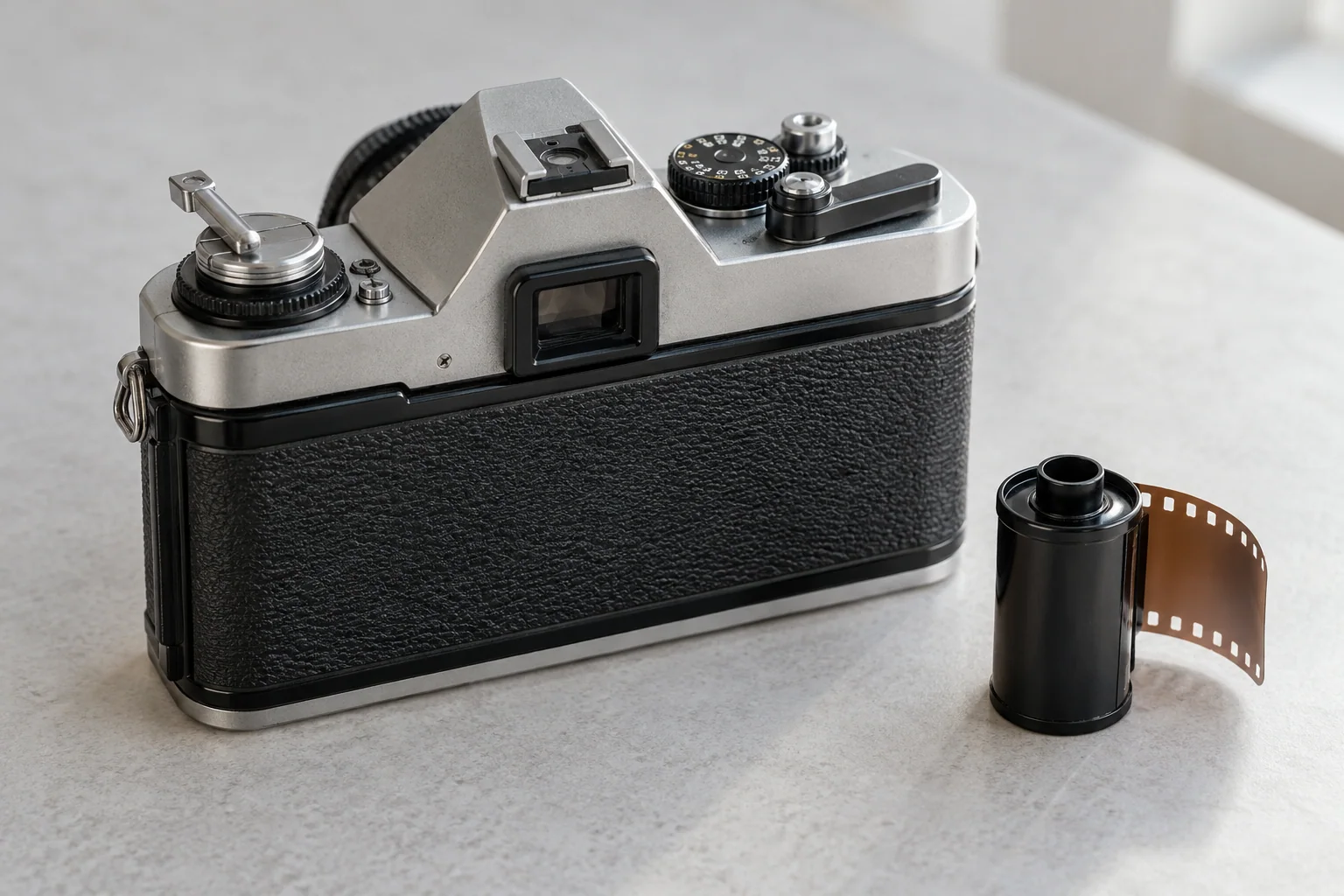
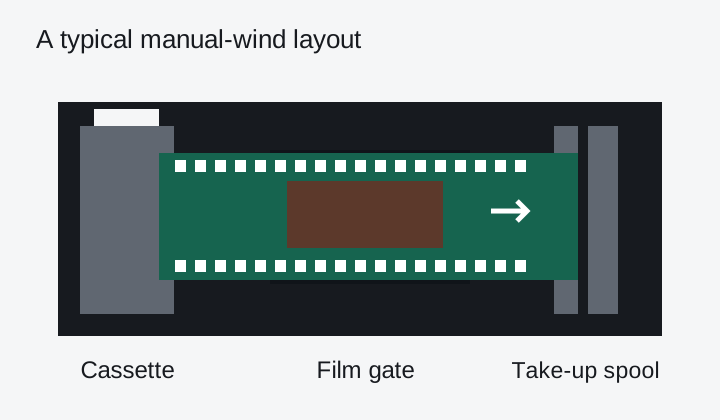
Read your camera’s manual before opening the back. Loading varies between models: some have a slotted take-up spool, some have a quick-loading system, and some load and rewind automatically. These steps describe a typical manual-wind 35mm camera.
Load it away from direct sun
- Open the back using the release described in the manual. Place the cassette in its chamber.
- Pull out enough leader to reach the take-up spool, and secure it as the camera requires.
- Check that the sprocket teeth engage the film perforations. Gently advance it to confirm it feeds straight.
- Close the back, then make the blank advances the manual calls for to reach the first usable frame.
- Set the ISO or ASA dial to the number on the box, if the camera doesn’t read it automatically.
The Canon AE-1 specifications describe a slotted spool. Canon’s QL17 entry describes its different Quick Loading arrangement. Follow the instructions for the one you own.
Check that the film is moving
On many manual-wind cameras, the rewind crank turns as you advance loaded film once any slack has been taken up. Watch for it without opening the back.
ILFORD’s processing troubleshooting guide recommends checking that movement where the camera has a rewind lever. A film that never advanced can come back with edge markings but no pictures.
If winding suddenly feels wrong, stop and check the manual. Forcing the lever can damage film or the camera.
Rewind before opening the back
At the end of the roll, use the rewind release and crank as the manual instructs. Keep rewinding until the film has returned to the cassette. Many manual cameras feel noticeably easier to turn once the leader leaves the take-up spool.
An automatic model may have a different indicator, and some cameras wind the film out at loading and return it frame by frame. Check your model’s sequence.
Unprocessed film is still light-sensitive after you’ve taken the pictures. Keep the back closed until you’re sure the rewind has finished. If film is stuck, ask a lab to remove it in darkness.
Mark the cassette with anything the lab needs to know, such as a requested push process, and arrange development and scans.