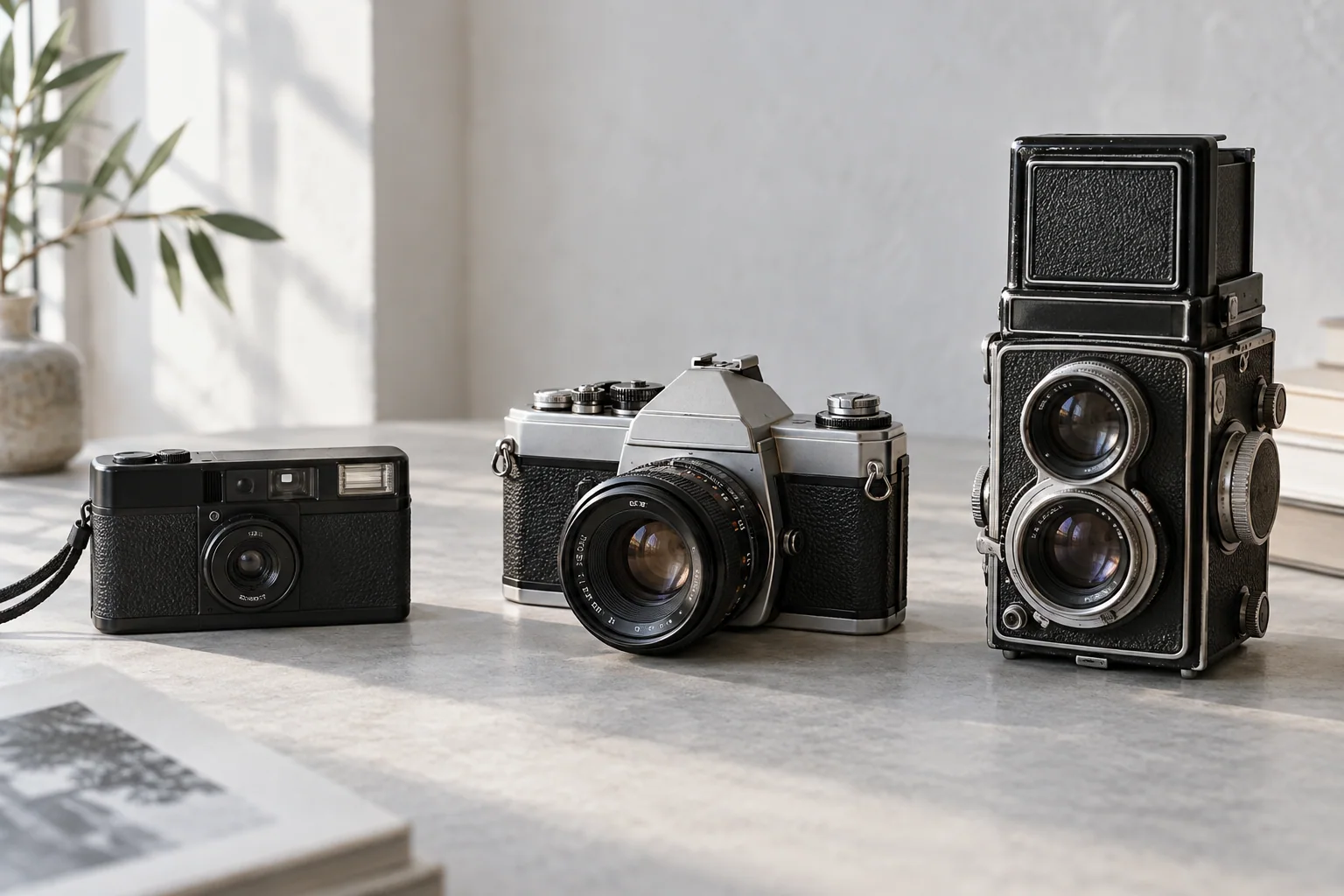
35mm versus 120 film: which format should you try?
Understand the difference between a 35mm cassette and 120 roll film before choosing your first camera or moving to medium format.
Start with the camera you have, or the kind of camera you want to carry. Film format determines which roll will fit and how much of it the camera uses for each photograph.
What the names mean
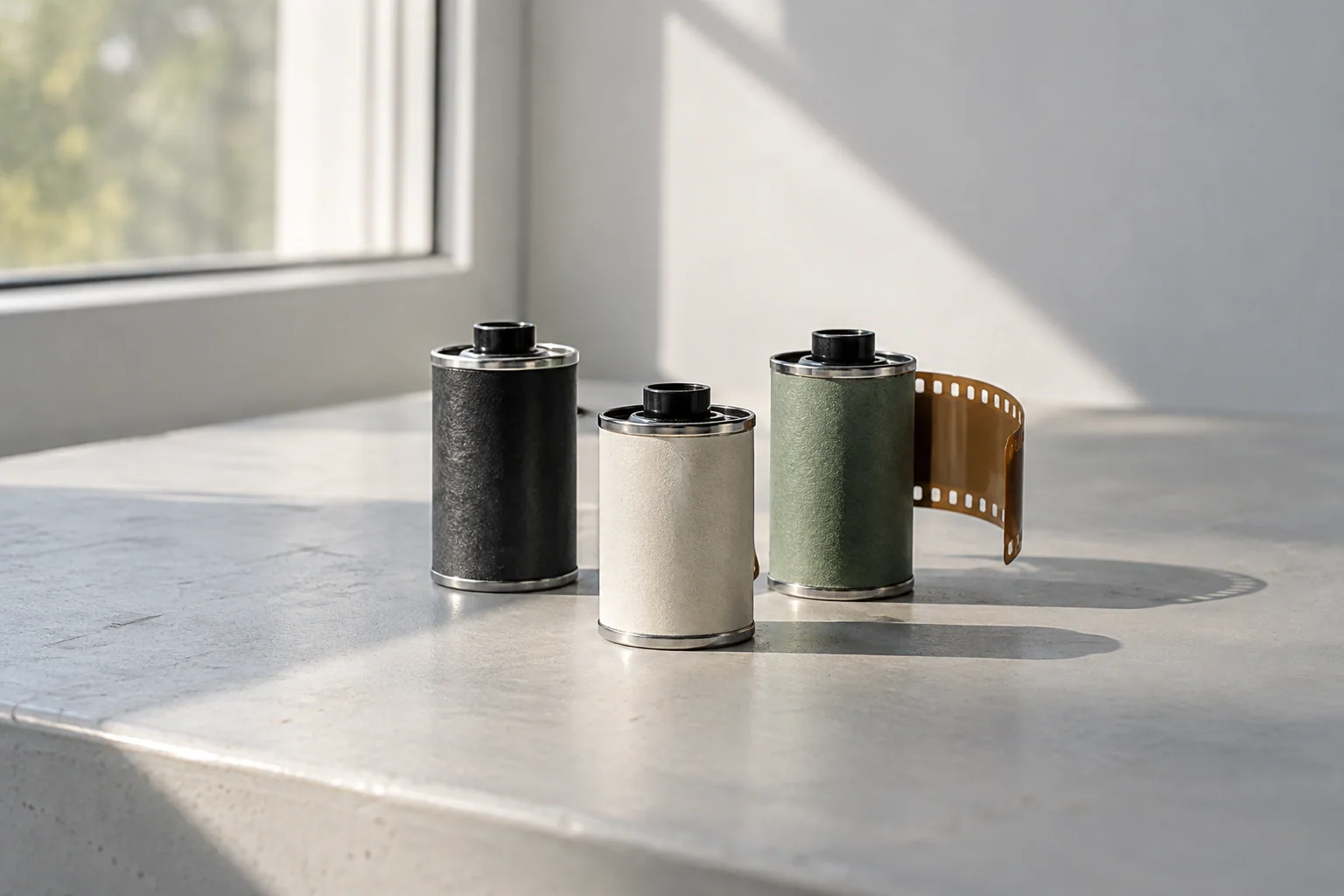
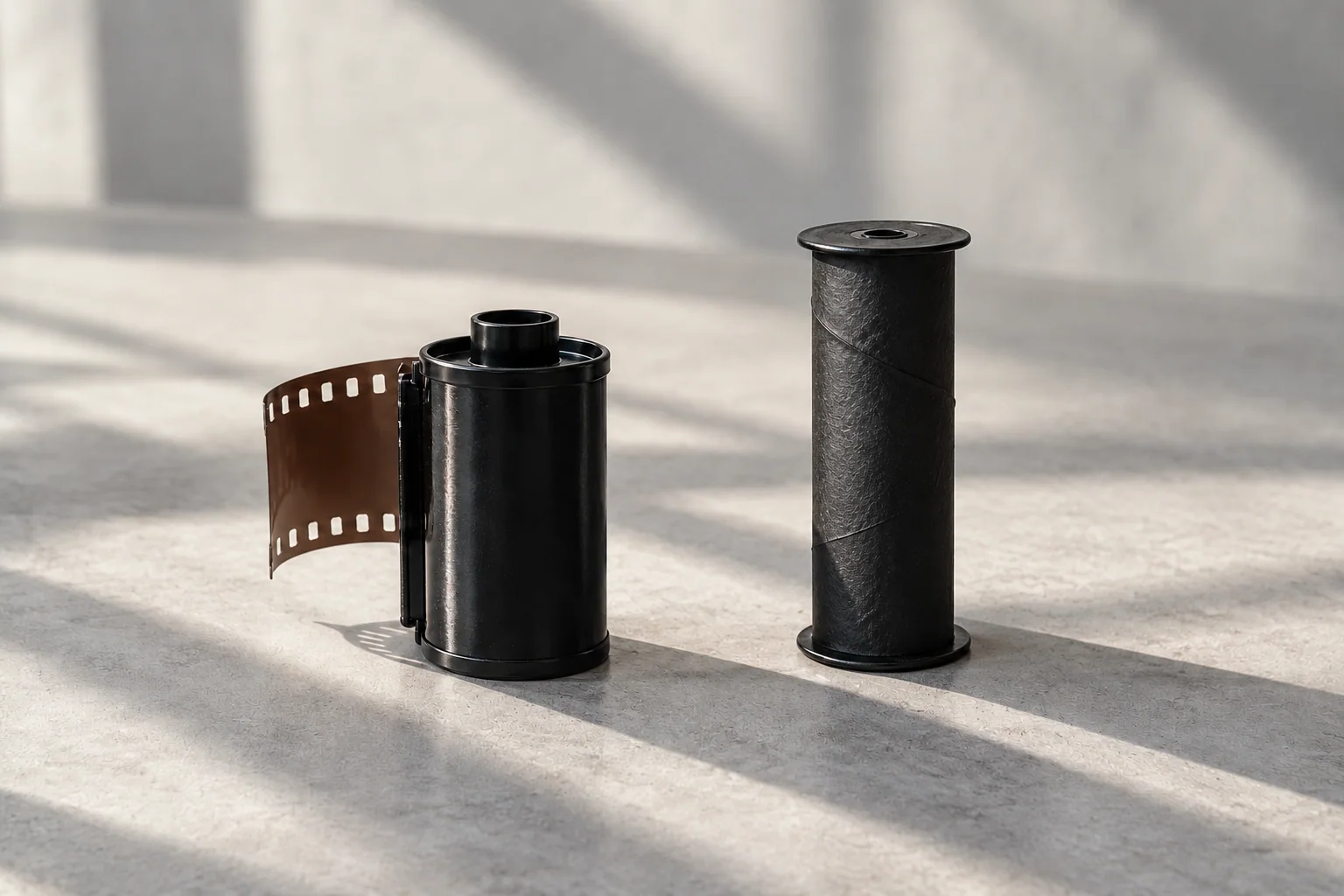
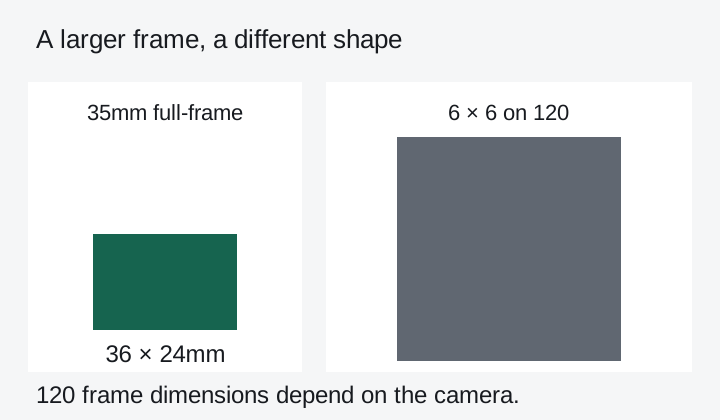
35mm film, also called 135, comes in a cassette with perforations along its edges. A standard full-frame 35mm camera makes a 24 × 36mm image. Half-frame cameras use a smaller part of that area for each picture.
120 is roll film for medium-format cameras. It’s supplied on a spool with backing paper. The name identifies the format. It doesn’t mean ISO 120 or 120 pictures. ILFORD’s product brochure separates its 35mm, 120 and sheet-film ranges.
The practical differences
| Question | 35mm | 120 |
|---|---|---|
| What goes in the camera? | A 35mm cassette | A 120 spool with backing paper |
| How big is the picture? | Usually 24 × 36mm in a full-frame camera | A larger frame, with dimensions set by the camera |
| How many pictures? | Commonly 24 or 36 on a full-frame roll | Fewer, check your camera’s frame size and count |
| What happens after shooting? | Develop and scan the roll | Develop and scan the roll, with fewer frames per roll |
Medium format’s larger negative can be useful for detailed prints. The result still depends on the lens, focus, film and processing. Before buying a camera, ask your lab about the formats it handles and its scan options.
More frames is another option
If you mainly want more photographs from a roll, consider half-frame 35mm. The Kodak Ektar H35 doubles the nominal picture count by dividing the frame area. You’ll trade negative size for the extra frames.
Find Kodak Ektar H35
Purchases through these links may earn us a commission. As an Amazon Associate I earn from qualifying purchases.
Choose a manageable first system
Check which formats your local lab can develop and scan, and compare the cameras’ weight and controls. Borrowing one for a day can answer more than a long list of specifications.
Our camera filters let you explore formats. Once you’ve chosen the size that fits your camera, pick the film speed for the light you’ll have.