How to choose the right film camera for you
Find a camera you'll enjoy carrying, with the controls you want and a lens that suits the way you shoot.
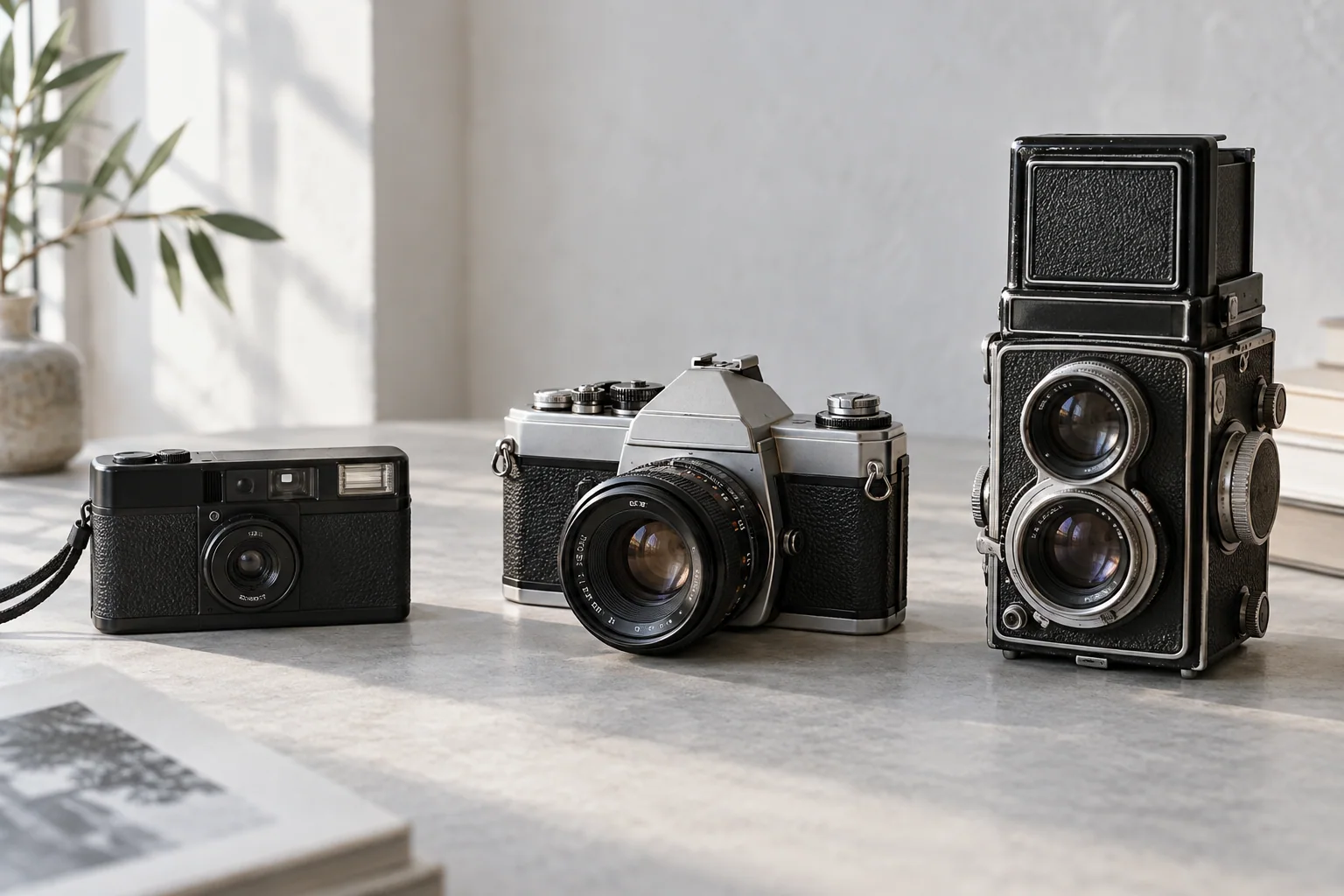
Start with the way you want to use the camera. For a walk around town, you may want something small. For portraits, you may prefer more control over focus and exposure. Decide how much you want to carry and which settings you want to handle before choosing a model.
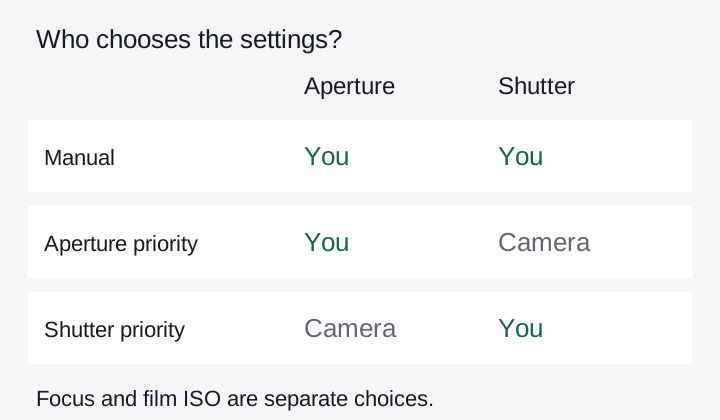
How involved do you want to be?
A manual SLR lets you choose shutter speed and aperture and focus through the taking lens. It suits someone who wants to see what each adjustment does. The Pentax K1000 manual shows how its controls work.
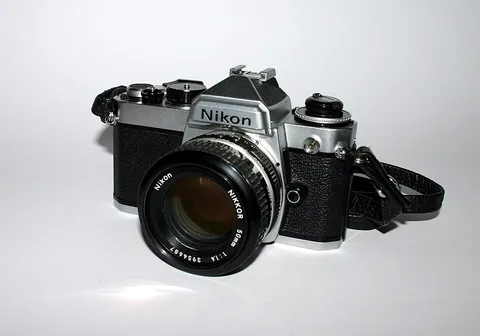
An SLR with aperture-priority exposure can make a walk less fiddly. You choose the aperture and the camera chooses a shutter speed. Nikon’s history of the FE describes its automatic and manual modes.
A compact can make sense when carrying a camera matters more to you than changing lenses. Check the actual model: fixed-focus, autofocus and manual-focus compacts behave differently. A manual-focus rangefinder uses a separate focusing image in the viewfinder. Leica explains how its focusing patch works.
Find Pentax K1000
Purchases through these links may earn us a commission. As an Amazon Associate I earn from qualifying purchases.
Find Nikon FE
Purchases through these links may earn us a commission. As an Amazon Associate I earn from qualifying purchases.
Choose a film format
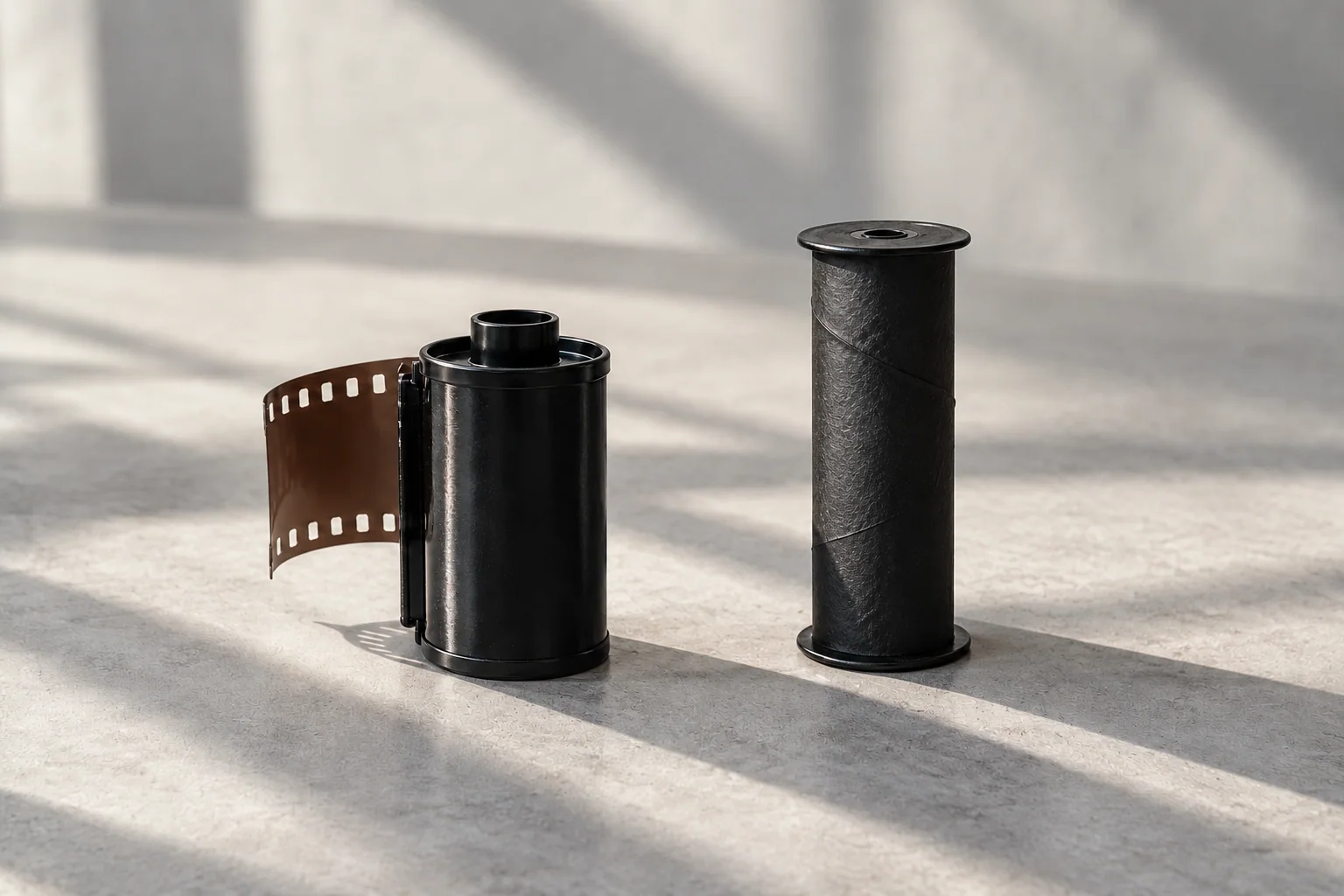
For a first camera, 35mm is a practical choice to investigate. Check which films are available where you live and find a lab that can develop and scan them.
Medium format gives you a larger negative, but you’ll get fewer pictures from each roll. Read 35mm versus 120 before choosing a system.
Check the individual camera
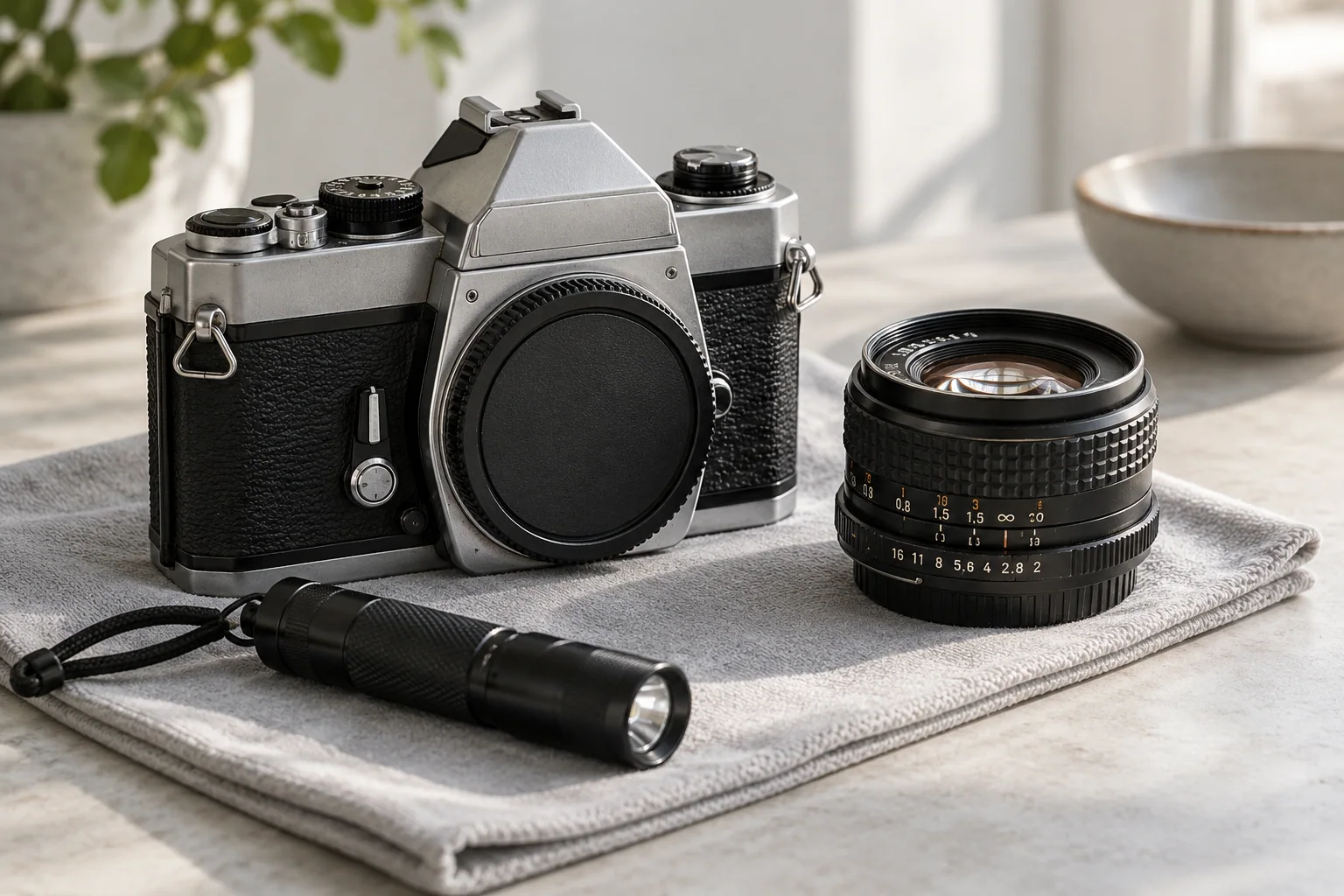
Check which lens and batteries the camera needs, and start with a test roll. Ask whether the camera has been film-tested, whether the meter works, and whether you can return it if it has a fault.
If you can handle one before buying, try focusing, winding and reaching the controls. A camera that feels awkward in your hands may spend most of its time on a shelf.
Browse the camera library and look at sample pictures, then check the manual for the models you shortlist. Those pictures also reflect the photographer, film and processing, so use them as inspiration while you compare the cameras’ controls.
Explore these cameras
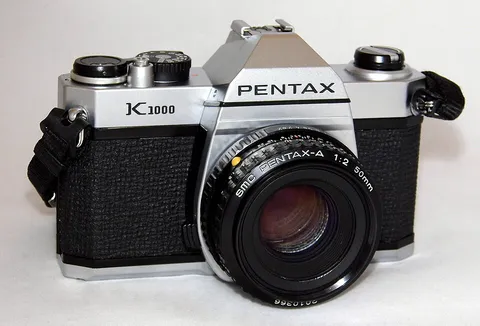
Pentax K1000