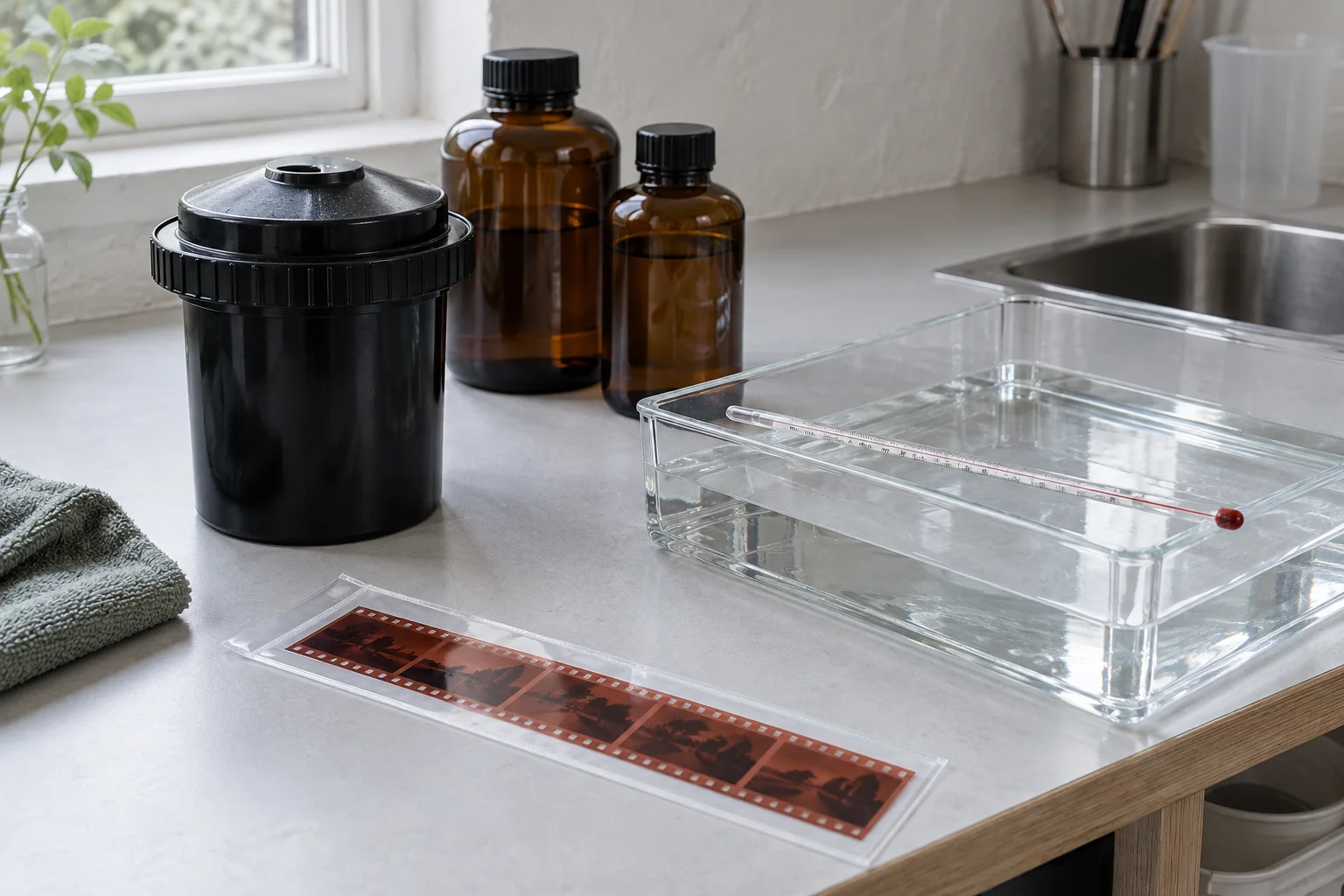
How to develop black-and-white film at home
What you need for your first tank of black-and-white film, and how loading, developing, fixing and washing fit together.
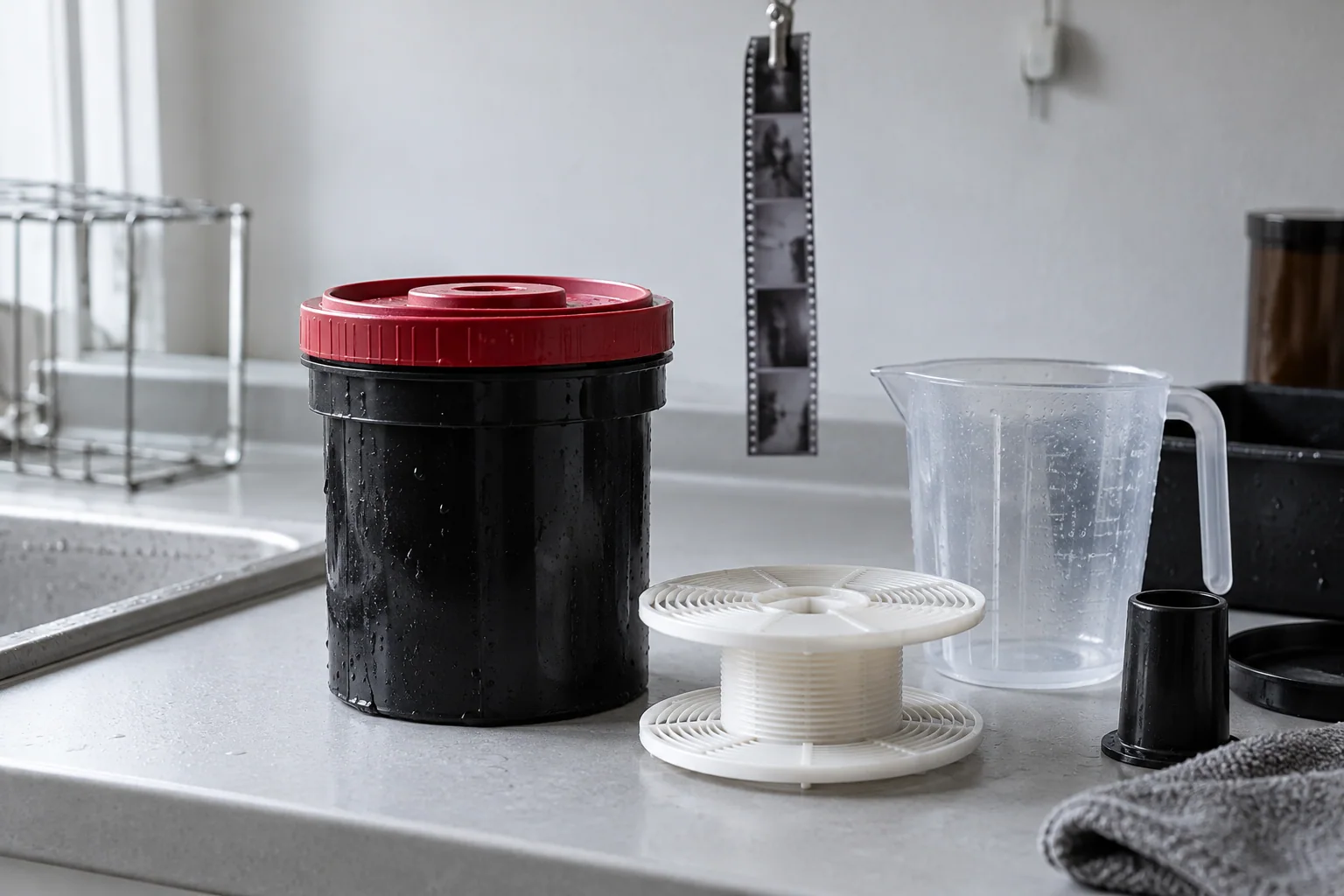
Developing a roll at home starts with a light-tight tank and a little practice. The awkward part is getting the film onto the reel in complete darkness. Once the tank is properly closed, you can work in normal room light.
Check the process first
This guide is for conventional black-and-white negative film. Some black-and-white films, including ILFORD XP2 SUPER, use C-41 colour processing. Check the box before buying chemicals. ILFORD’s beginner guide explains the exception.
Get the equipment together
You’ll need a developing tank and reel, a changing bag or fully dark room, measuring containers, a thermometer and a timer. Film clips and a clean place to hang the negatives finish the setup.
Use film developer, stop bath and fixer suited to your film. Read their dilution instructions and safety sheets. Keep the work away from food surfaces, wear the recommended protection, and ventilate the room. ILFORD’s processing guide has an equipment list and chemical handling advice.
Work through one roll
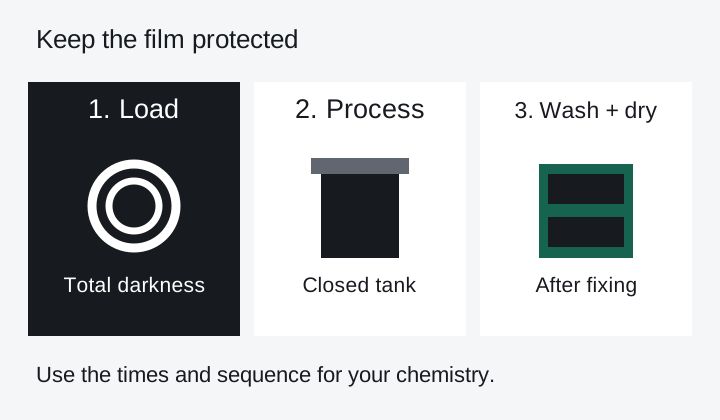
- Practise loading the reel with a spare, unimportant roll in daylight. Do the real loading in complete darkness, then close the tank before turning on a light.
- Mix the chemicals and check their temperature. Choose the development time for your exact film, developer and dilution.
- Add developer, start the timer and follow that developer’s agitation instructions.
- Drain the developer, then use the stop bath and fixer for their specified times. Keep the tank light-tight until fixation is complete.
- Wash the film as instructed, use a wetting-agent rinse if recommended, and hang it somewhere clean to dry.
Many black-and-white schedules use 20°C, but the time belongs to the film and developer combination. ILFORD’s technical downloads provide processing charts and temperature guidance.
Give the negatives time to dry
Handle dry film by its edges, cut it into strips and store it in negative sleeves. Avoid touching the wet emulsion. Grit or rough handling can leave scratches.
Keep a note of the film, dilution, time and temperature for the next roll. Follow local disposal rules for used chemistry, particularly silver-bearing fixer. The manufacturer’s full processing booklet is useful beside your first tank.