Half-frame vs full-frame film cameras: which suits you?
See how half-frame changes the number, shape and size of your photographs, and what to ask a lab before your first roll.
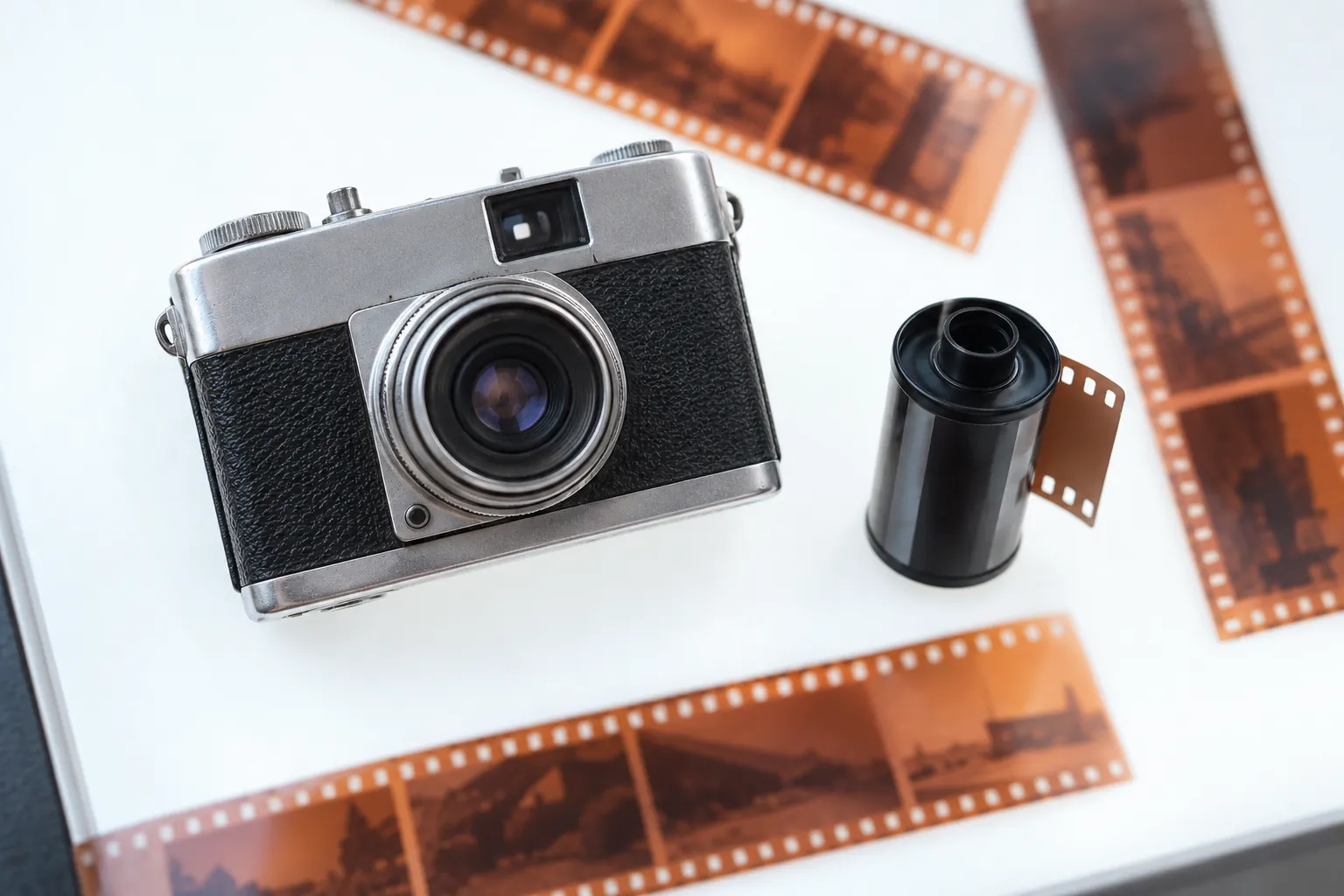
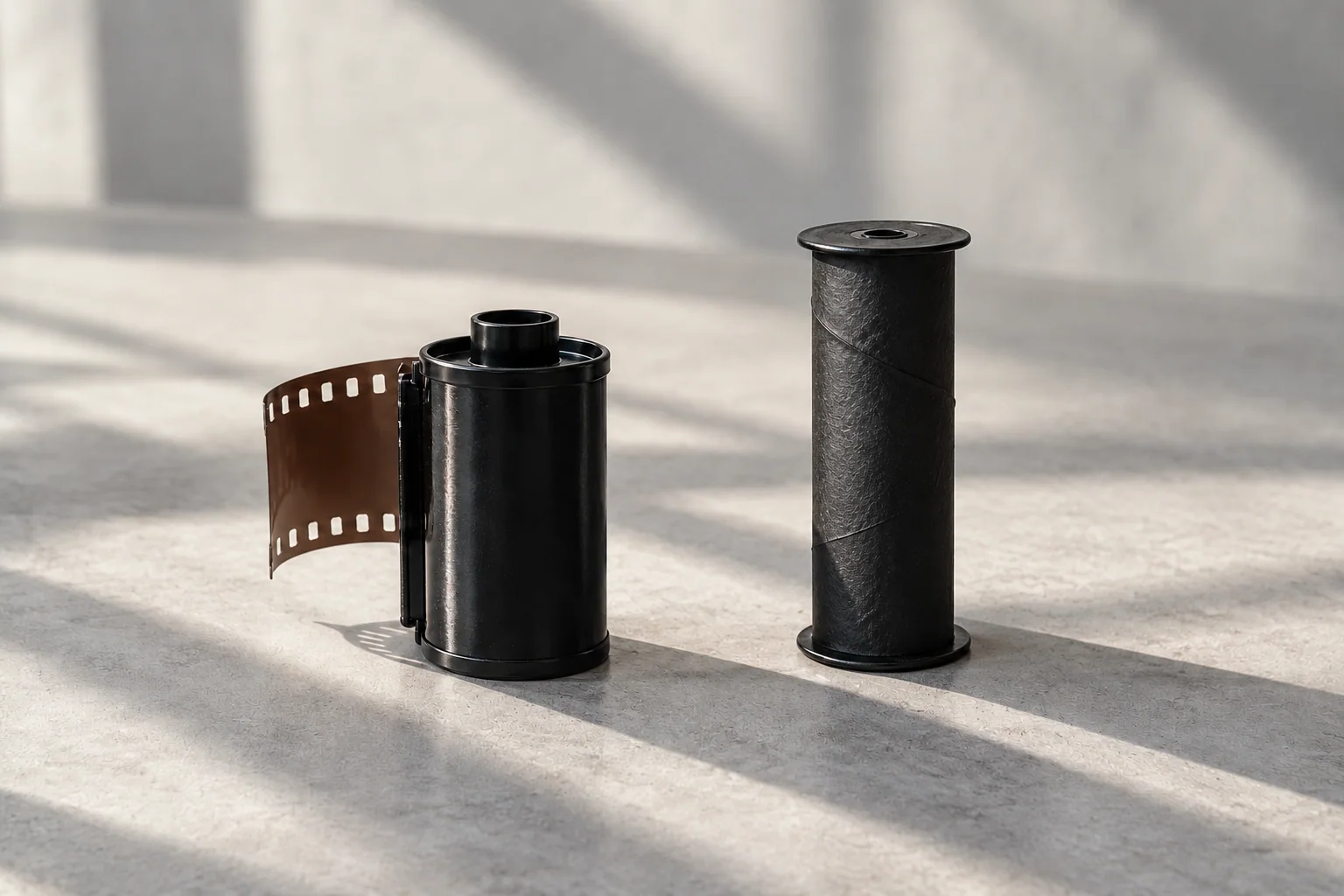
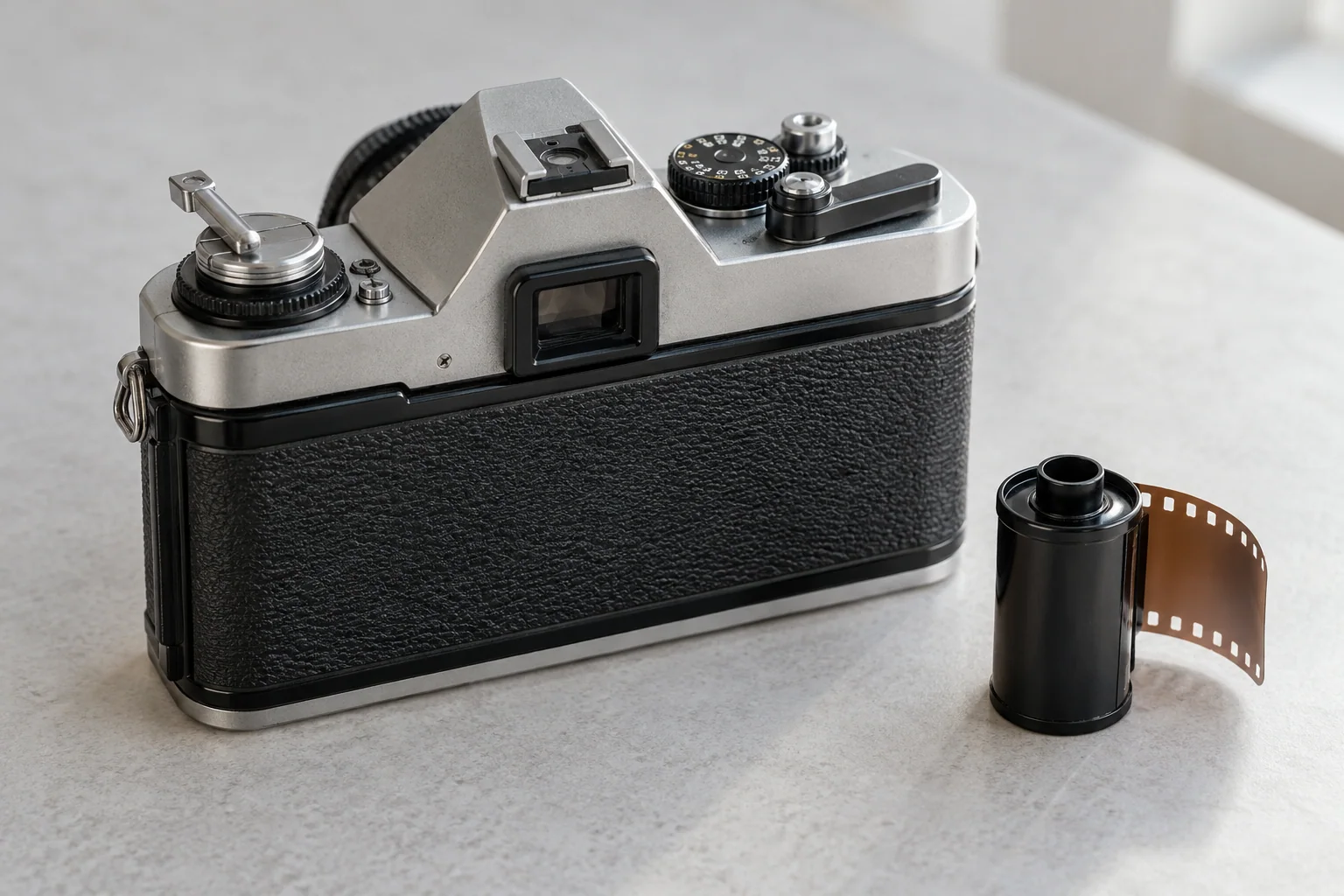
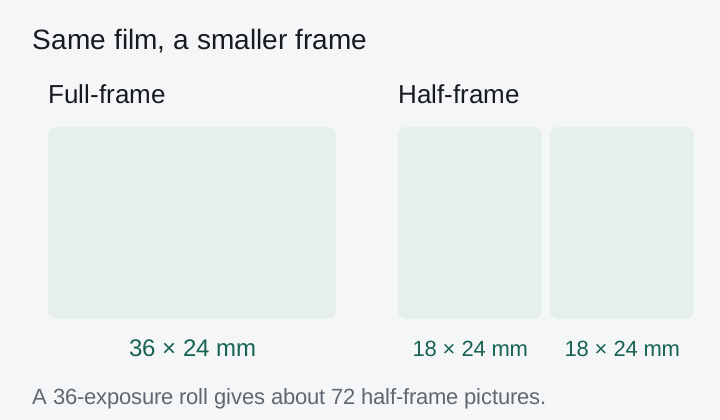
A half-frame camera uses ordinary 35mm film but gives each photograph a smaller space on it. You get roughly twice as many pictures from a roll. The tradeoff is a smaller negative when you want a large print or a detailed scan.
Here, full-frame means a 36 × 24mm frame on 35mm film. It doesn’t refer to a digital sensor.
One roll, different frame sizes
A typical half-frame negative measures 18 × 24mm. A 36-exposure roll therefore gives about 72 photographs, depending on loading and the camera. Full-frame usually gives the advertised 36.
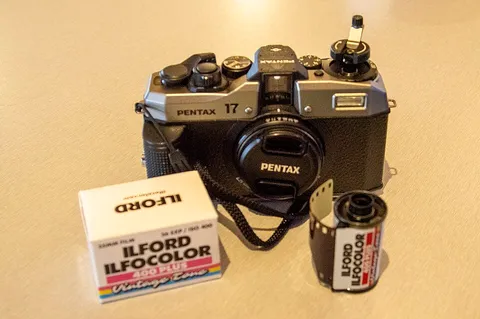
The Pentax 17 uses this half-frame format. With the camera held normally, its pictures are vertical. Turn it to make a horizontal composition.
When half-frame makes sense
Consider it for a visual diary, everyday walks or a project where you want to photograph more freely before finishing a roll. Its vertical frame can also be a welcome prompt to compose differently.
For the same print size, the smaller negative needs more enlargement. Grain and small focusing errors can become more noticeable. Full-frame gives you more negative area if detailed enlargements are your priority.
New and older cameras behave differently
The Pentax 17 has zone focusing, so you choose a distance range. It is not an autofocus camera. Older models vary in their controls and power requirements.
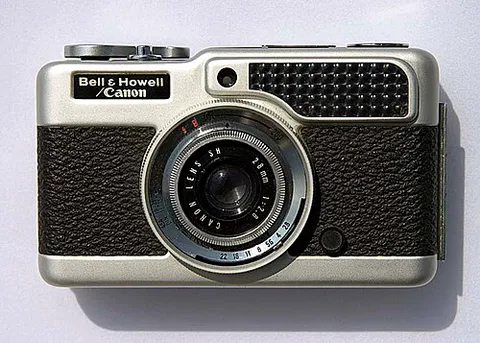
For example, the Canon Demi is an earlier half-frame design with a selenium meter and coupled exposure settings. Canon’s museum entry describes the original model. Check a vintage example’s meter and film transport before relying on it.
Find Pentax 17
Find Canon Demi
Ask the lab about scanning
Tell the lab you are sending half-frame film. Ask whether it can deliver a separate scan of every photograph, and what scan size it offers. Some scanning workflows pair adjacent frames, which may suit a diptych but be awkward when you want individual images.
The film still needs the process specified for that stock. If you already have a lab, ask about its half-frame service before choosing the camera.
Explore these cameras
Canon Demi